
If you’ve ever stared at your boarding pass and wondered why Los Angeles insists on being LAX or what mysterious organization MCO could possibly stand for, you’re not alone. Airport codes feel like an inside joke between geography and bureaucracy – a secret language seasoned travelers pretend to understand but mostly just memorize.
Behind the three-letter alphabet soup sitting on every baggage tag lies a surprisingly rich (and occasionally ridiculous) story. Airport names and codes tell us not just where we’re going but how aviation history, local heroes, and a few accidental moments of alphabetical brilliance came together to shape modern travel.
So let’s unpack the tale of how North America’s airports got their names, their infamous codes, and – occasionally – their identity crises.
Call Me by My Full Name: The People and Places Behind Airports
Many North American airports wear their hearts on their sleeves. Denver International Airport (DEN) and Dallas/Fort Worth International (DFW) are plain-spoken examples – they tell you where you are and leave it at that. But dig deeper, and you’ll find a fascinating habit: airports named not for geography, but for people.

Nearly every major city has one – memorial in motion. New York’s John F. Kennedy International Airport (JFK) bore the much plainer name Idlewild until 1963, when it was renamed to honor the recently assassinated president. In Atlanta, Hartsfield–Jackson International (ATL) carries the legacies of two mayors, William B. Hartsfield and Maynard Jackson, both credited with expanding and modernizing the airport.
Canada followed similar patterns: Toronto’s Lester B. Pearson International Airport (YYZ) honors the Nobel Peace Prize–winning former Prime Minister who helped shape postwar diplomacy. In Mexico, Benito Juárez International (MEX) in Mexico City proudly nods to the reformist 19th-century president.
When the Numbers Fell Away: A Brief History of Airport Codes
Now to the real puzzle, those three-letter codes. The airport naming process might follow politics or pride, but the codes? They’re born of necessity, history, and sometimes complete coincidence.
In the early 20th century, before commercial flight took off, the U.S. used two-letter weather station identifiers run by the National Weather Service. When aviation began expanding in the 1930s, pilots needed a quick, standardized shorthand for airports, something that could fit easily on maps and radio systems.
But there was one small problem; many of those two-letter combinations were already taken. So, the International Air Transport Association (IATA) added a third letter, creating the three-letter format we still use today. Thus, Los Angeles became LAX — the “X” added solely to fill space, a placeholder that stuck around.
Not all countries adopted the same approach. Canadian airport codes start with a “Y” because, in the 1940s, the Canadian government mapped airport codes from existing weather stations that began with Y (indicating “Yes” – a telegraph code confirming the presence of a weather station). That’s why Vancouver is YVR, Toronto is YYZ, along with smaller airports like YUL (Montreal) and YXU (London, Ontario).
In Mexico, logic prevailed and most airport codes align neatly with their city names: MEX for Mexico City, CUN for Cancún, and GDL for Guadalajara). It’s as if Mexico’s aviation authorities were given an early draft of the naming chaos about to unfold north of the border and opted out.
The Mysteries (and Mishaps) of Famous Airport Codes
If you’ve ever puzzled over why Chicago’s airport is ORD rather than “OHA” or “CHI,” the answer goes back to its prewar roots. Once called Orchard Field, the site was named for the nearby orchard community. When it was renamed O’Hare International Airport after WWII flying ace Edward “Butch” O’Hare, the existing code stuck. So, ORD it was – a leftover from the orchard days.
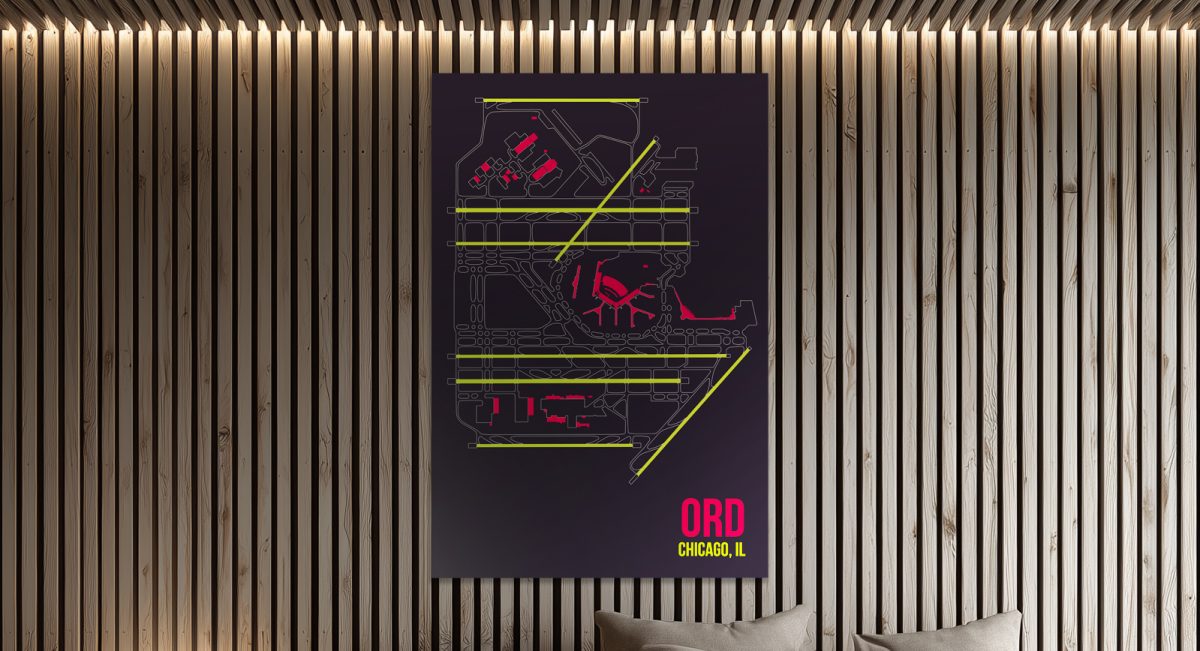
The same goes for Orlando’s MCO, a holdover from McCoy Air Force Base, which predated Disney World by decades. Though the base closed in the 1970s, the code remained.
And then there’s YYZ, Toronto’s most debated code. Its origin comes from a Telegraph station near Malton, Ontario, designated “YZ.” When Pearson International expanded there, Canada’s naming system dropped a routine “Y” prefix on top, producing “YYZ.” Decoded, it simply means “Yes, this is the YZ location.”
Musician Geddy Lee of Rush later immortalized the code in the band’s instrumental track “YYZ,” turning a bureaucratic artifact into a national symbol. You can almost picture the control tower humming along.
When Codes Collide: The Quirky and the Unfortunate
Of course, not every airport gets a sleek or dignified code. Some inherit three letters that seem tailor-made for pranks.
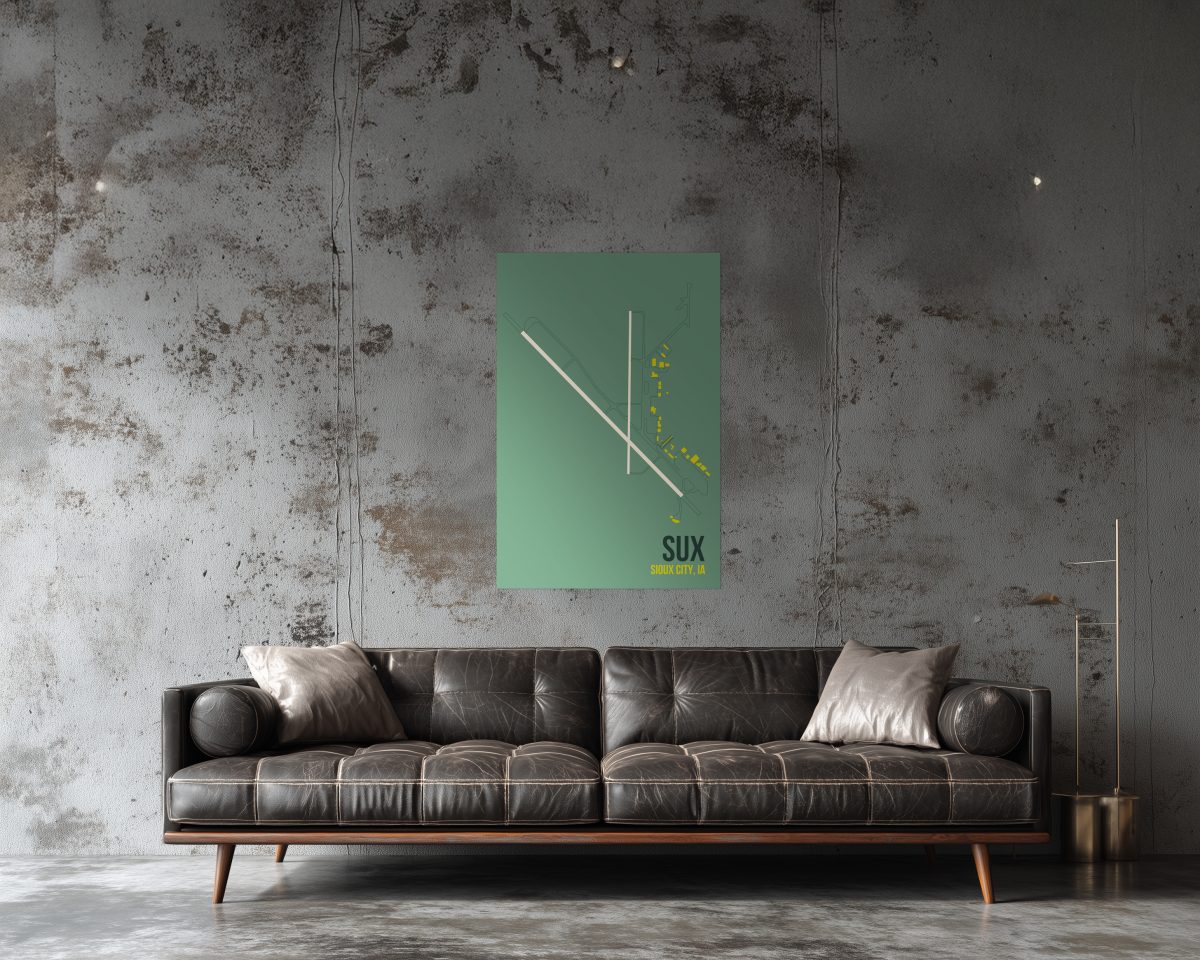
Take Sioux City, Iowa, whose airport bears the startling code SUX. Locals once petitioned the FAA for a change – to something, anything else – but when their request was denied, they embraced it instead. Today, you can buy “FLY SUX” merchandise at the airport gift shop.
Scattered around the map are other gems like FUN (Funafuti International Airport, Tuvalu), EEK (Eek Airport, Alaska), OMG (Omega Airport, Namibia), and BOO (Bodo Airport, Norway). All were created under the same utilitarian rules: assign a unique three-letter code that fits the database and avoids duplication, even if it accidentally sounds like a reaction meme. These accidental jokes are part of the charm of aviation history: what began as a dry, standardized system to keep planes, tickets, and bags organized now doubles as an endless source of wordplay for travelers killing time at the gate.
Some of the real joys of airport codes are the unintentional punchlines, but the humor exists because the system was built for practicality, not personality. These codes were created as compact identifiers for ticketing, baggage routing, and radio communication, evolving from early two-letter weather and navigation station markers into the three-letter format used worldwide today. Fresno Yosemite International Airport, for example, ended up with the code FAT because it once served the municipality of Fresno Air Terminal, and that historic name locked in the three-letter label long before anyone worried about how it would look on a T-shirt.
These quirks, however, have marketing appeal. Airport souvenirs bearing the local code have become bestsellers. You’ll see LAX, JFK, YYZ, all printed proudly across T-shirts and luggage tags. What started as a system of convenience has become, unintentionally, a tool of travel branding.
The Art (and Science) of Remembering Codes
Beyond the humor, there’s a certain logic, or at least pattern recognition, at work. Travel writers, pilots, and frequent fliers often develop a sixth sense for decoding them.
A few tips for playing the airport-code detective:
- If it starts with “Y,” you’re probably in Canada. (Or connecting through an airport in Canada.)
- An “M” often signals Mexico (MEX, MTY, MZT).
- U.S. codes tend to build from city names, but not always predictably. (LAX, ATL, SEA, BOS)
- Historical leftovers explain most oddities (ORD, MCO, BNA for Nashville — originally “Berry Field Nashville”).
For aviation buffs, the IATA airport code directory lists Airport names and codes. They have an easy to use official lookup tool that is both practical and fun. If you’re really into aviation trivia, especially regarding airport names and codes, this book is sure to keep your turning pages for hours.
The Politics and Pride of Airport Naming
Airport renaming is a surprisingly emotional affair. When a city decides to rename its airport, it often sparks a public debate over history versus hometown pride.
In 2001, Houston Intercontinental Airport became George Bush Intercontinental, a decision celebrated by some and resisted by others who still refer to it as “IAH.” That code, like most, remains from its original name, “Intercontinental Airport Houston.”
Similarly, Washington National became Ronald Reagan Washington National Airport, though the code DCA never changed. I confess that I still call it National.
In Mexico and Canada, the naming process tends to be steadier, often honoring national figures rather than local ones. Still, identities evolve. Travelers may not immediately know who Pearson, Juarez, or Trudeau were, but the airports bearing their names become international ambassadors, branding, in steel and signage, the values those figures embodied.
When Bureaucracy Meets Branding
As air travel became globalized, airport codes took on lives of their own. Airlines print them on everything – boarding passes, ads, luggage tags – transforming once-arcane abbreviations into lifestyle symbols. A “Fly LAX” hoodie now means more than an airport terminal; it’s a badge of wanderlust.
What began as a problem of navigation became an unexpected branding opportunity, giving cities a shorthand identity recognized worldwide.
Seattle-Tacoma International Airport (SEA): My Home Airport
The airport code SEA has been tagging luggage and boarding passes for Seattle-Tacoma International Airport since the 1940s, long before anyone was Instagramming their layovers. The three-letter code comes from the letters in “Seattle,” and it was officially adopted as the airport’s identifier in 1943 as the region built a modern airfield to replace increasingly military-focused Boeing Field (BFI) during World War II.
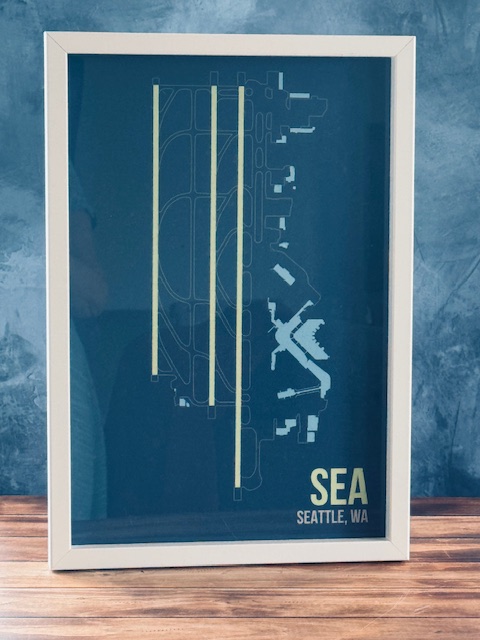
In the alphabet soup of aviation, SEA does triple duty: it is the IATA code travelers know, it doubles as the FAA location identifier, and with a “K” tacked on the front—KSEA—it becomes the airport’s ICAO code for pilots and flight planners.
Over the years, SEA has become far better known worldwide than the airport’s nickname “Sea-Tac,” which helps avoid confusion with the neighboring city of SeaTac while still nodding to both of the area’s large cities, Seattle and Tacoma. The airport has grown into the primary gateway to the Pacific Northwest, with multiple runways, international routes, and tens of millions of passengers a year, and SEA has become synonymous with foggy mornings, mountain views, and coffee-fueled departures to just about everywhere.
This aviation art piece (from 08Left) will soon be hanging in my office. If you’re an aviation geek, check out their art and other av products.