
Tahiti sits in the heart of the South Pacific, and is the largest and best‑known island in French Polynesia, a French overseas collectivity scattered across miles and miles of ocean. It is part of the Society Islands archipelago and lies roughly halfway between California and Australia, a little south of the equator. That’s why those trade winds and lagoon‑blue skies feel so effortless and constant.
Papeete, on the northwest coast, serves as the capital of French Polynesia, and is the main gateway for visitors arriving from around the world. It’s also the embarkation port for cruises in Tahiti, with visitors spending time in the city before and after cruises.
Island History
Long before Europeans ever set eyes on the island, Tahiti was settled by Polynesian navigators who crossed vast stretches of open ocean using stars, swells, and bird patterns as their guide. In the 18th century, the island drew the attention of European explorers such as Captain James Cook and later became entwined with stories like the Bounty mutiny.
Over the 19th century, rival French and British interests, along with missionaries, reshaped Tahiti’s political and cultural landscape, It became a French protectorate in the 1840s and was formally annexed as a colony in 1880.
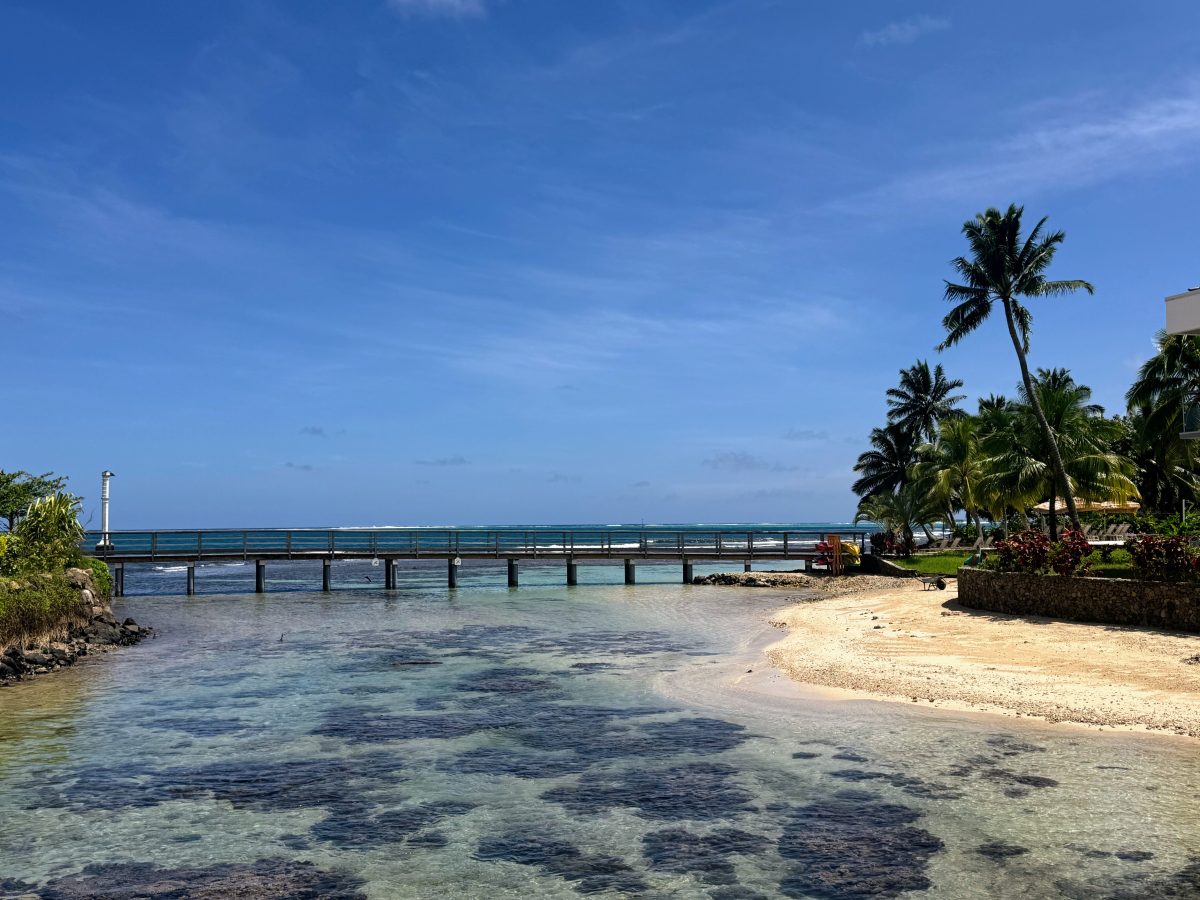
Today, Tahiti is the cultural and economic heart of French Polynesia, blending Maohi traditions, French influence, and a laid‑back island rhythm that makes it both a dream destination and a fascinating place to to soak up local history, culture, and find meaningful souvenirs beyond plastic trinkets.
It’s a destination that lingers with you long after your flight home: the trade winds, the lagoon light, the echo of drums at dusk. So how do your bring that feeling and experience home with you? Finding the right Tahiti souvenirs will have you thinking fondly of your trip for years to come.
We like to bring home souvenirs from travel, usually food and other consumable products, along with art for our home. We always prefer to support the local businesses when we shop, and have found street markets and local shops are a good choice for souvenir shopping.
Here are our recommendations for shopping in Tahiti, souvenirs worth bringing home with you.
Foodie Delights
If you’re anything like me, the most powerful memories of a trip often come back in the kitchen. Tahiti is no exception.
Tahitian vanilla and island spices
Tahitian vanilla is a world away from generic “vanilla flavoring.” If you haven’t tried it, prepare yourself for a flavorful treat.
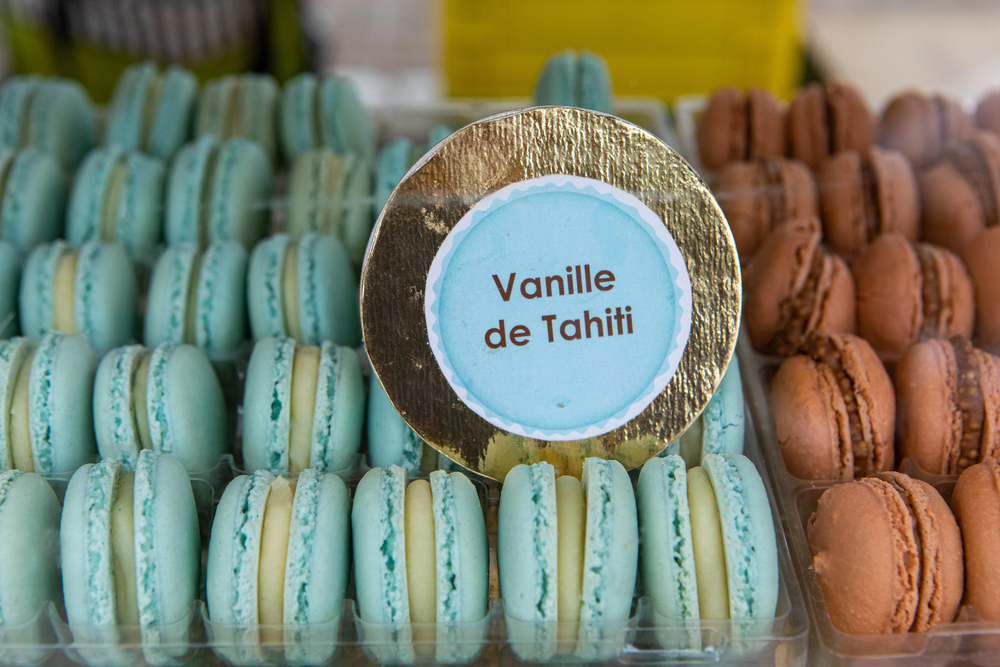
The pods are plump, almost juicy, with a floral, fruity aroma that hints at cherry and stone fruit. Use it where the flavor can really zing – folded into custards and panna cotta, whisked into a simple vanilla–bean ice cream, or stirred into a basic butter cake or cookies (I won’t be trying those macarons) where there aren’t competing spices. Don’t overlook using it is main course dishes; a tiny bit in a sauce for grilled fish or seafood may be transformative.
Look for vacuum‑packed or dried pods from local producers (fresh, undried pods usually won’t make it through customs). If you have time, visit a vanilla farm on an island tour and buy directly from the grower; you’ll come home with both a delicious ingredient and a story.
Island salt and spices
You’ll also find local herb and spice blends, often with vanilla, citrus, or chili, that are easy to tuck in your bag. They’re perfect for dusting over grilled seafood, chicken, or even roasted vegetables when you’re craving a hint of the tropics at home.
We brought home a bag of chile-lime Tahitian salt and used in often. It enhanced so many dishes, but it’s gone now. Does that mean a return trip to Tahiti should be in our plans?
Monoi oil
Monoi oil might just be the most Tahitian thing you can bring back in a bottle. Traditionally, it’s made by infusing coconut oil with the petals of tiare (Tahitian gardenia), creating a silky oil with a soft, heady scent. Locals use it as a moisturizer, hair treatment, massage oil, and light perfume.
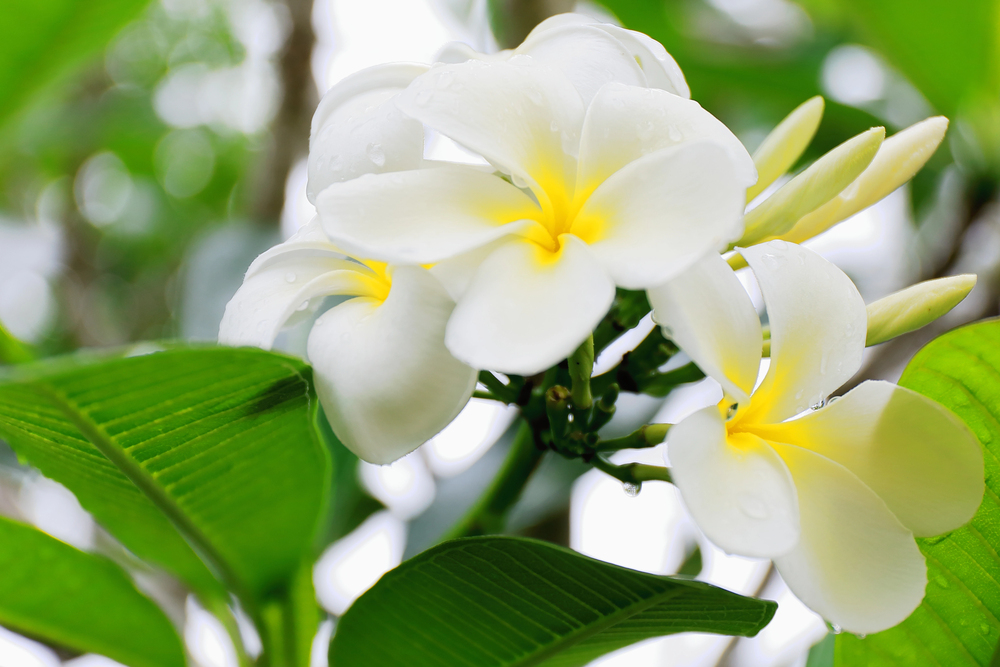
Look for authentic monoi made in Tahiti rather than scented imitations. Look for the appellation of origin on the label – “Monoi de Tahiti.” Only oil made in French Polynesia using specified methods can use that label.
Gardenia can be an overpowering fragrance, and those of us of a certain age can remember the strong, lingering aroma of Jungle Gardenia perfume. Monoi oil is not as strong and heady, and a small bottle goes a long way. Every time you smooth it on your skin after a shower, you’ll get a little flashback to those South Seas sunsets.
Rum
Rum is the evening soundtrack of the islands: sundowners on the deck, tiki glasses clinking, and the sky going from coral to indigo. We enjoyed so many varieties of rum cocktails on our Windstar Tahiti cruise, and have tried to create them at home, with varying success.
Tahiti has a handful of local distilleries producing rums many of which you’ll rarely see outside French Polynesia. That seems to be the secret ingredient that we can’t find at home.
Bring back a bottle of aged rum for sipping or a white rum for cocktails. Back home, you can recreate that tropival feeling with a simple rum punch, a twist on a Mai Tai, or just rum over ice with a squeeze of lime and a slice of pineapple. It’s almost like being back in the islands.
Local Crafts and Specialties
When we shop for souvenirs, we like to start where everyday life happens. In Tahiti, that’s the Marché de Papeete, a two-story market full of most everything you may want. From produce and local foods, to jewelry and textiles, you’ll find great price here as you’re shopping alongside locals. Sundays are the busiest market days, and you’ll see lots of locals shopping before church.
If nothing captures your eye at the market, head off for the specialty shops and galleries along the seafront.
Tahitian black pearls
Black pearls are the iconic Tahitian souvenir for good reason. They’re cultured in the lagoons of French Polynesia and come in an array of colors that are anything but plain “black”: charcoal, silver, peacock green, and subtle blue‑grey. Each pearl is slightly different, which is part of the appeal.
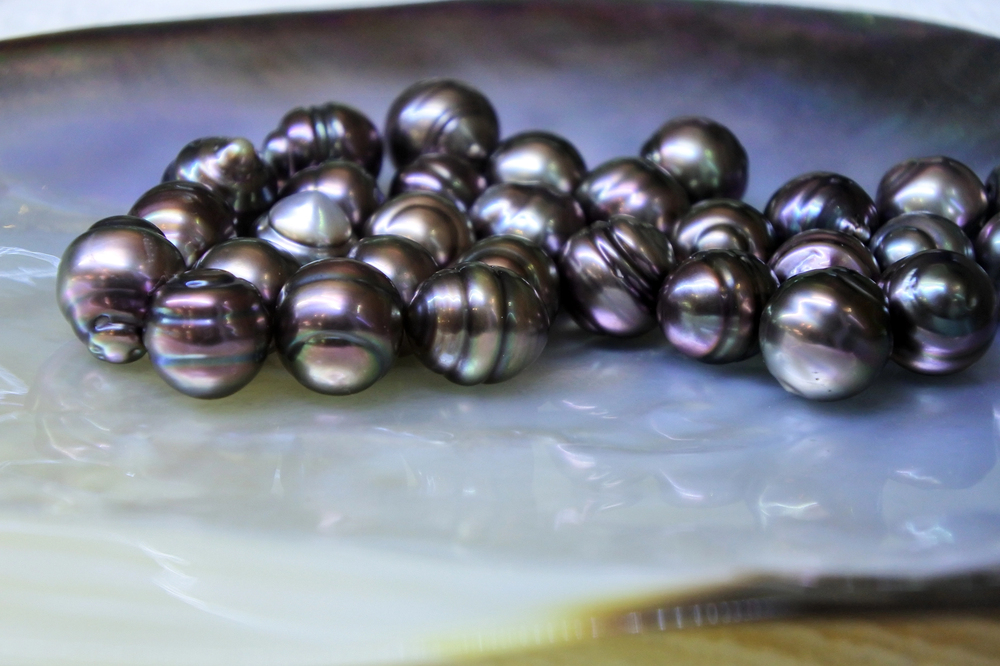
If a full strand is beyond your budget (many are the price of a mortgage payment), look for a single‑pearl pendant or a pair of simple earrings. Irregular or baroque pearls are more affordable, have a lot of character, and make wonderful souvenirs and gifts. Whatever you choose, ask about where and how the pearls were farmed, and buy from a reputable jeweler or vendor.
Because of a looming cyclone, we diverted to the Marquesas, so we didn’t get to the pearl farms. Another reason to book a return trip.
Pareos
You’ll see pareos everywhere – those bright, floaty sarongs tied at the waist or crossed and knotted as dresses. They’re inexpensive, versatile, and incredibly useful during your trip as beach cover‑ups, makeshift dresses, picnic blankets, or even light shawls. At home, they do double duty as scarves, table runners, or colorful throws at the end of a bed.
Prices vary with fabric and workmanship, but you can usually find beautiful options in the markets and shops without spending a fortune. If you fall for one, buy it; you’ll always find a way to use it.
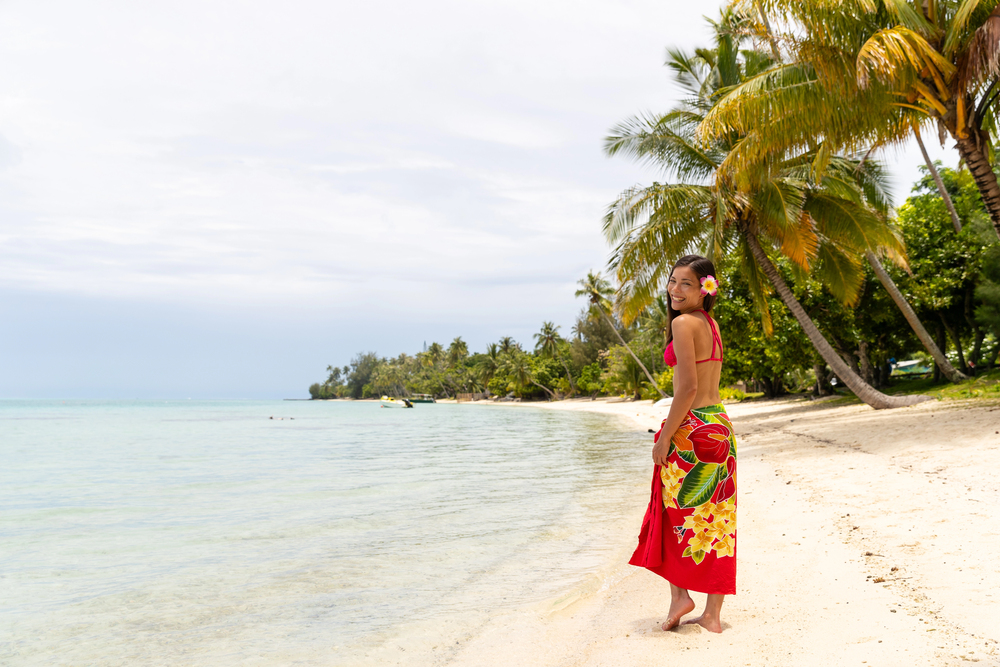
A true confession moment here: I love pareos and think they’re beautiful. Despite numerous demonstrations, tutorials, and youtube videos, I just can’t master the art of gracefully wrapping and knotting them. I look a mess. I use mine as shawls, lightweight wraps, accent pieces, and colorful home decor. But I still wish I could tie one properly.
Woven hats
Woven hats, made from coconut or pandanus leaves, are very practical under the Tahitian sun. They’re fun, cute, and serve a purpose. You can find them everywhere.
They are, however, tricky to pack. Plan to wear yours on the plane if you want it to arrive home in one piece.
Note: Fresh or green palms are typically banned, even if crafted into a hat.
Wood masks, tikis, and carvings
Rows of carved masks and tiki figures are a familiar sight, especially around the Papeete market. These pieces tap into Polynesia’s deep carving tradition and can be striking accents at home.
If supporting local artisans is important to you (it is to me), ask where a piece was made. Brightly painted or heavily beaded carvings are often imported, while simpler, unpainted wood masks and tiki statues are more likely to be local. You’ll also find carved bowls, serving utensils, and small sculptures that are beautiful, functional souvenirs that earn their place in your luggage.
When buying wood carvings, check the bottom for a signature to ensure they are authentic Marquesan works rather than imports.
Music and instruments
Tahitian music has a familiar lilt, especially if you’ve spent time in Hawaii. Think guitars, ukuleles, and those easy island harmonies, but with its own rhythms and flavor. Look for recordings by local artists or small labels; they’re perfect for background music on a slow weekend morning when you’re missing the islands.
If you’re musically inclined, you might notice Tahitian ukuleles, which are double‑strung and have a brighter, more mandolin‑like sound than their Hawaiian cousins. They’re not the most packable souvenir, but for musicians, they’re unforgettable.
Artisan Products
This is where you’ll find the one‑of‑a‑kind pieces: textiles, stone and shell art, and other handmade creations that feel more like heirlooms than souvenirs.
Tifaifai bedspreads and pillows
Tifaifai (or tivaivai) are traditional Tahitian applique quilts, typically made with bold, contrasting fabrics and large, stylized motifs, often flowers, leaves, and other island symbols. They’re vibrant, graphic, and instantly recognizable.
A full bedspread is a statement piece and not always cheap, but it can transform a room and bring a bit of Polynesian warmth into your home year‑round. If you’re short on space or budget, cushion covers or smaller textile pieces inspired by tifaifai designs are a great alternative.
Shell jewelry and flower‑stone carvings
Shell necklaces are part of the island’s welcome and farewell rituals, and bringing one home lets you keep that tradition with you.
Look for pieces that use local shells and natural materials, and consider how you’ll actually wear or display them. A simple, well‑made shell necklace or bracelet is easier to incorporate into everyday life than an elaborate ceremonial piece.
You may also see carvings made from local stones, including volcanic “flower stones.” Small stone tikis, pendants, or abstract carvings are a beautiful way to bring home a tangible piece of the landscape itself.
Remember, you cannot take home natural souvenirs directly. So don’t pick up seashells, coral, plants, rocks, etc., from the beach with plans to take them home.
Tiki statues
Tiki figures are rooted in Polynesian mythology and can be powerful symbols of protection and identity. Today’s artisans carve them in wood, stone, or bone, often using traditional designs and local materials like kauri or coconut wood.
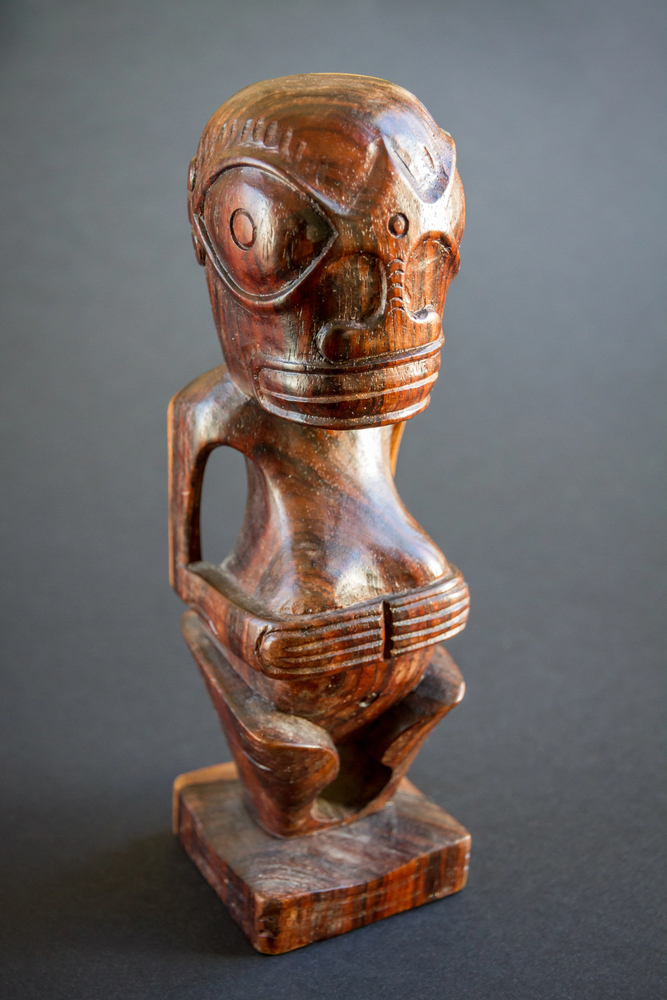
When browsing, choose a piece that speaks to you, not just the most “impressive” one. Ask the seller about the meaning of the design and the origin of the material; those details will stay with you long after the statue is on your shelf. And don’t forget to check for authenticity.
Perfumes and scented souvenirs
Beyond monoi oil, you’ll find perfumes and scented products that draw on Tahitian vanilla, tiare, and other local botanicals. The best of these are subtle and layered. Sample warm vanilla anchored with spices and florals, rather than cloyingly sweet blends.
A travel‑sized bottle (remember your limitation on liquids) or solid perfume is easy to pack and becomes a kind of olfactory diary. One spritz and you’re back on the deck of your ship or overwater bungalow, listening to water lapping and drinking in that tropical air.
Where to shop
Start at the Papeete central market to see everything in one place: fresh produce, flowers, crafts, textiles, and an endless parade of colors and smells. I think you’ll find the best prices here at the central market. From there, wander into nearby boutiques, artisan workshops, and small galleries along the seafront (great artisan quality, higher-end pieces and more refined works of art). If you have time, try one of the local hopping centers; it’s where the locals shop.
One final, important note: many markets in Tahiti (and across French Polynesia) sell items imported from elsewhere, often Indonesia or China, mixed in with local crafts. If authenticity matters to you, don’t be shy about asking where something was made and who made it. Your questions (and your francs) help support the people and traditions that make the islands so compelling in the first place.
Currency
The currency of French Polynesia is the French Pacific Franc (CFP Franc). The valuation at time of publishing this post is $1US = CFP Franc $1.04.
As we evaluated prices, it was easiest to assume the currencies were equal. This was close enough for us to decide if we wanted to make a purchase.
We found U.S. currency accepted for taxi service, and a few larger businesses in tourist areas, and that credit cards and other contactless payment were also widely accepted, even at some of the local craft markets.
Don’t rely on that, though.
We recommend accessing local currency from an ATM, so you have pocket money for tips and small purchases.