

Charleston’s architecture gives you plenty to admire on a walk through the historic district. Step inside its museums, though, and you begin to understand the people, craftsmanship, commerce, and conflicts behind those handsome buildings.
The choices reach well beyond historic houses and Civil War history. You can spend a morning exploring Southern art, discover the Lowcountry’s prehistoric coastline, or cross the harbor to walk the flight deck of an aircraft carrier. Several smaller museums fit comfortably between a leisurely lunch and an afternoon exploring the city, and there are enough options to divide up if you’re traveling with a group of friends.
I recommend choosing a few that match your interests and give them room in your weekend getaway itinerary. Pair an art museum with a historic house, or a broad introduction to Charleston with a smaller, more focused collection. Leave time to consider what you’ve seen, particularly at sites exploring the lives and experiences of enslaved people.
These 12 museums in Charleston offer galleries, historic houses, and other different ways to get to know the city, including one substantial excursion across the harbor to Mount Pleasant. Suggested visiting times are planning estimates. Check official websites for current exhibitions, tour arrangements, and opening days before setting out.
- The Charleston Museum
- Gibbes Museum of Art
- Halsey Institute of Contemporary Art
- Old Slave Mart Museum
- Patriots Point Naval & Maritime Museum
- The Museum at Market Hall: Home of the Confederate Museum
- The Powder Magazine
- Fort Sumter Visitor Center at Liberty Square
- Mace Brown Museum of Natural History
- Edmondston-Alston House
- Nathaniel Russell House Museum
- Aiken-Rhett House Museum
The Charleston Museum
Founded in 1773 and known as America’s First Museum, The Charleston Museum is a useful starting point for understanding the city and the surrounding Lowcountry. Its collections connect human history with the natural environment, providing context for places you’ll encounter elsewhere in Charleston.
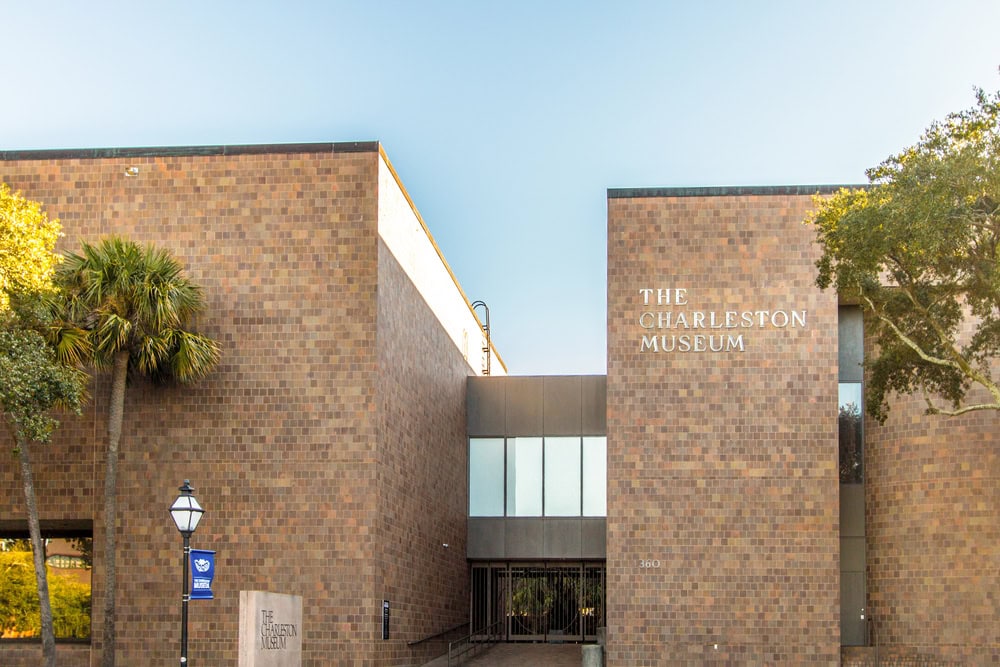
The Lowcountry History Hall explores the region’s Indigenous peoples, European settlement, and the lives and labor of enslaved African Americans. Other galleries cover Charleston silver, weaponry, and the city’s Civil War experience. The Historic Textiles Gallery presents changing exhibitions drawn from the museum’s clothing and textile collections.
The Bunting Natural History Gallery adds fossils, wildlife specimens, and geology to the story. Allow around two hours for a first visit, with extra time if textiles or natural history are particular interests. The nearby Aiken-Rhett House makes a useful companion visit, with a lunch break between the two.
Top Highlights:
- Lowcountry History Hall – Exhibits tracing the region’s history through Indigenous life, settlement, and the experiences of enslaved people.
- Historic Textiles Gallery – Changing displays of clothing and textiles, with opportunities to examine fabric, construction, and decorative detail.
- Bunting Natural History Gallery – Fossils, animal specimens, and geological exhibits explaining the Lowcountry’s natural environment.
Location: 360 Meeting Street | Official Website
Gibbes Museum of Art
The Gibbes Museum of Art explores American art through its connections to Charleston and the South. Historical portraits, landscapes, and contemporary works show how artists have depicted the region’s people and places across different periods.
Portrait miniatures are a particular strength. These small paintings invite you to slow down and examine details of faces, clothing, and brushwork that can be easy to miss at first glance. The Charleston Renaissance collection looks at the city’s early 20th-century artistic revival, while changing exhibitions broaden the selection beyond the permanent displays.
Allow roughly 90 minutes to two hours, depending on the temporary exhibitions and your interest in the collection. Check the tour and talk calendar before choosing your day, especially if you enjoy discussing the work with someone who can explain its local connections.
Top Highlights:
- Portrait Miniatures – Small paintings distinguished by their craftsmanship and personal detail.
- Charleston Renaissance Art – Works associated with the city’s early 20th-century artistic revival.
- Changing Exhibitions – Featured artists and subjects that give returning visitors something different to explore.
Location: 135 Meeting Street | Official Website
Halsey Institute of Contemporary Art
At the College of Charleston, the Halsey Institute of Contemporary Art adds contemporary work to an itinerary that might otherwise lean heavily toward history. It presents changing exhibitions rather than a permanent collection, so the experience depends on what is showing during your visit.
Exhibitions may feature photography, painting, installation, or work combining several media. Before going, read the current exhibition description to see whether the artist or subject appeals to you. Scheduled artist talks and exhibition tours can help explain the materials, ideas, and decisions behind the work.
Admission is free, and about an hour is a reasonable starting point for a gallery visit. Confirm that an exhibition will be on view: public gallery hours apply during exhibitions, with closures possible between shows. Its Calhoun Street location makes it convenient to combine with the Mace Brown Museum.
Top Highlights:
- Changing Contemporary Exhibitions – Presentations devoted to artists and subjects outside Charleston’s historical collections.
- Artist Talks – Scheduled opportunities to hear artists discuss their ideas and working methods.
- Exhibition Tours – Programs that help visitors examine and discuss the work on display.
Location: 161 Calhoun Street | Official Website
Old Slave Mart Museum
The Old Slave Mart Museum examines Charleston’s role in the domestic interstate slave trade, focusing on the period from 1856 to 1863. Its Chalmers Street building survives from a larger complex where enslaved people were confined and sold.
The museum explains how the trade operated and what it meant for the people forced through it. Visiting the surviving building makes the abhorrent history difficult to keep at a distance. It also helps explain the economic system behind some of the wealth displayed in Charleston’s historic houses.
Allow about an hour, with flexibility afterward rather than a tightly timed reservation. The exhibits involve reading and reflection, and this is a visit that deserves your attention without the pressure of rushing to the next attraction. I found I needed a lot of breathing room after visiting here.
Top Highlights:
- Surviving Auction-Site Building – A remaining structure from a complex used to confine and sell enslaved people.
- Domestic Slave Trade Exhibits – Interpretation of how the trade operated within Charleston and across state lines.
- History of the Chalmers Street Site – The story of the auction complex and the building’s later preservation as a museum.
Location: 6 Chalmers Street | Official Website
Patriots Point Naval & Maritime Museum
Across the harbor in Mount Pleasant, Patriots Point is anchored by USS Yorktown, an aircraft carrier commissioned in 1943. Exploring its flight deck, aircraft displays, and interior spaces gives you a sense of the scale and complexity of life aboard a naval vessel.

The museum also includes the destroyer USS Laffey, the land-based Vietnam Experience, and the Medal of Honor Museum aboard Yorktown. You could devote much of a day to the site. For a more selective visit, reserve at least a half day and decide which sections matter most to you.
Accessibility varies considerably. Yorktown has an elevator serving the hangar bay, flight deck, and quarters, and the Vietnam Experience is wheelchair accessible. Other shipboard areas require stairs, and Laffey is not wheelchair accessible. Check the accessibility information when planning your route, and take Charleston’s heat into account when deciding how much to cover.
Top Highlights:
- USS Yorktown – An aircraft carrier with aircraft displays and exhibits about life and service aboard ship.
- USS Laffey – A historic destroyer whose smaller compartments provide a different shipboard experience.
- Vietnam Experience – A land-based exhibit recreating elements of a naval support base during the Vietnam War.
Location: 40 Patriots Point Road, Mount Pleasant | Official Website
The Museum at Market Hall: Home of the Confederate Museum
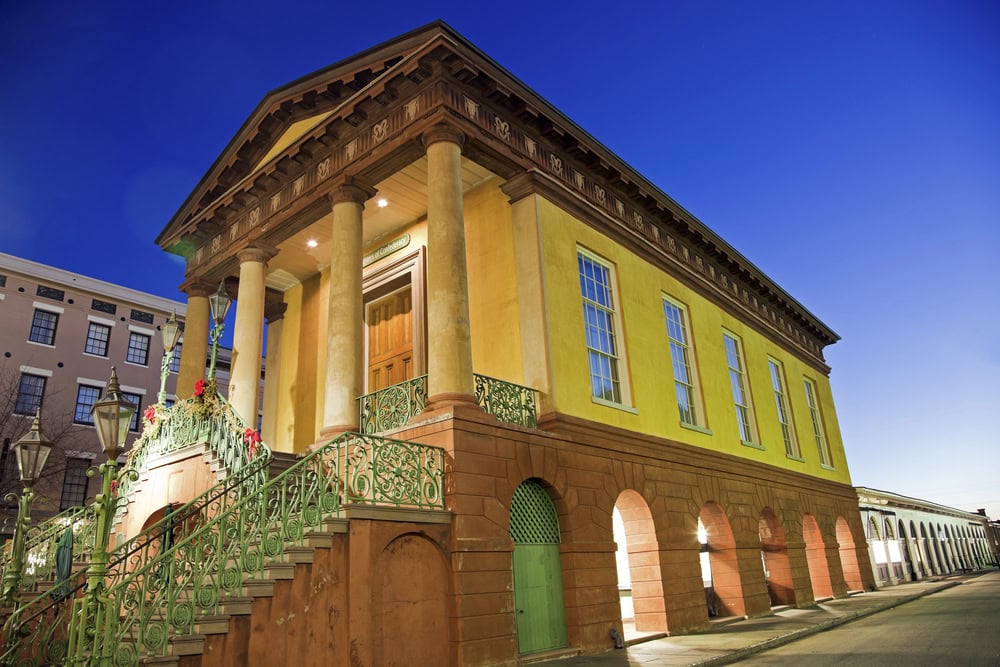
Located upstairs in Market Hall at the Meeting Street end of Charleston City Market, this museum is also known as the Confederate Museum. Operated by Charleston Chapter No. 4 of the United Daughters of the Confederacy, it displays flags, uniforms, swords, and other Civil War objects.
Visitors interested in Civil War artifacts will find a focused collection here. The organization behind the museum also makes this a place to consider how Confederate history has been collected and presented. Visiting the Old Slave Mart Museum and the National Park Service’s Fort Sumter exhibits provides additional interpretation of slavery, secession, and the war.
Allow roughly 45 minutes to an hour. Check opening days before making a special trip, and inquire about access if stairs are a concern: the collection is upstairs in the historic building.
Top Highlights:
- Historic Flags – Examples from the museum’s collection, including flags.
- Uniforms and Weaponry – Clothing, swords, and other objects associated with Confederate military service.
- Market Hall – The historic building overlooking the Meeting Street entrance to Charleston City Market.
Location: 188 Meeting Street, upstairs | Official Website
The Powder Magazine
Completed in 1713, The Powder Magazine is South Carolina’s oldest government building and a surviving part of Charleston’s colonial fortifications. The small brick structure stored the gunpowder used to defend the town.
Its thick masonry and tiled roof give visitors a look at a building designed for military storage rather than domestic comfort. Exhibits explain its place within colonial Charleston’s defenses and the settlement’s need to protect its supplies.
Allow about 30 to 45 minutes. The Cumberland Street location makes it easy to combine with the Gibbes Museum of Art or the City Market area. It is a particularly useful addition for readers interested in early architecture, offering a different kind of building from the grand residences on many Charleston itineraries.
Top Highlights:
- Original 1713 Structure – A surviving building from Charleston’s colonial defenses.
- Military Storage Design – Thick brick walls and a tiled roof built around the requirements of gunpowder storage.
- Colonial Defense Exhibits – Interpretation explaining the building’s role in protecting the settlement.
Location: 79 Cumberland Street | Official Website
Fort Sumter Visitor Center at Liberty Square
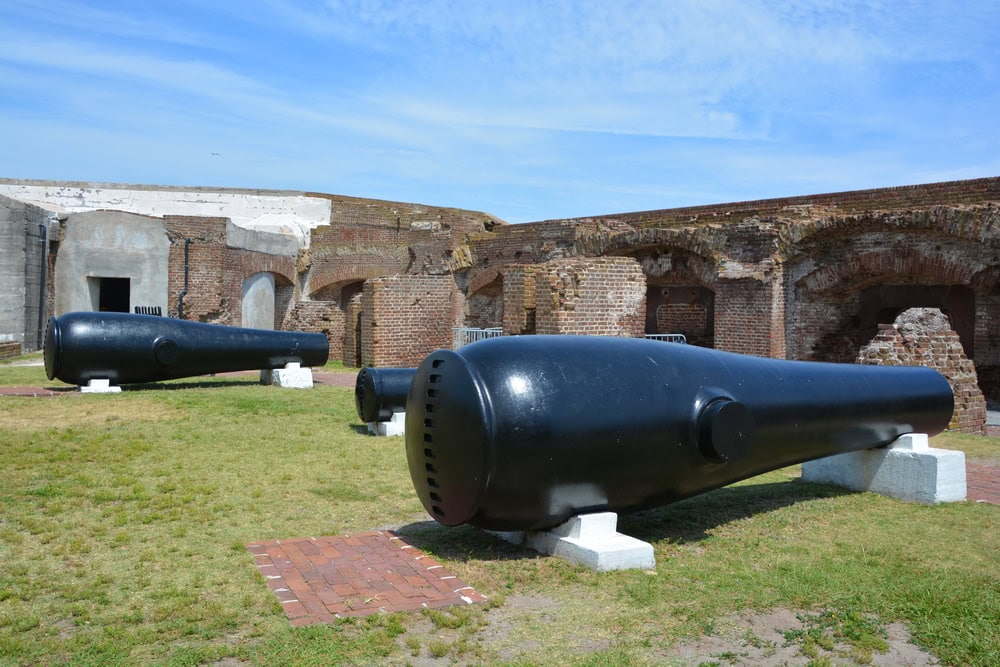
The Fort Sumter Visitor Center introduces the events leading to the Civil War. Located on the downtown waterfront at Liberty Square, it is also one of the departure points for boat trips to Fort Sumter.
The exhibits explain the tensions surrounding secession and the opening of the war, helping visitors understand why the fort became the focus of a national crisis. Spending time here before boarding the ferry gives the island visit a clearer historical framework.
The visitor center is free; the ferry trip requires a separate paid ticket. You can explore the museum without taking the boat. Allow around 45 minutes for the exhibits, and leave additional time before a reserved departure so you can read without watching the boarding line.
Top Highlights:
- Secession Exhibits – An introduction to the political tensions preceding the Civil War.
- Fort Sumter Interpretation – Displays explaining the fort’s place in the events of 1861.
- Liberty Square Waterfront – An outdoor setting where you can look across the harbor before or after exploring the exhibits.
Location: 340 Concord Street | Official Website
Mace Brown Museum of Natural History
The College of Charleston’s Mace Brown Museum of Natural History takes the Lowcountry’s story back long before its familiar buildings and streets existed. Located on the second floor of the science building at Calhoun and Coming streets, it explores fossils and prehistoric life, including the region’s ancient marine environment.
Fossil whales and their evolution are a strength of the museum. These exhibits explain how animals adapted to life in the water and how fossil evidence helps scientists reconstruct ancient environments. They also reveal a coastal South Carolina very different from the one visitors see today.
Admission is free. Set aside about an hour and confirm public visiting hours with the college before going. The museum’s compact size makes it a manageable addition to a day around the College of Charleston.
Top Highlights:
- Fossil Whale Exhibits – Specimens and interpretation exploring the evolution of whales.
- Prehistoric Marine Life – Fossils illustrating the animals that inhabited ancient seas.
- Lowcountry Fossil Discoveries – Connections between South Carolina and the region’s geological past.
Location: 202 Calhoun Street, second floor | College of Charleston Website
Edmondston-Alston House
Built around 1825, the Edmondston-Alston House combines Federal and Greek Revival design with a harbor-facing location on the High Battery. Much of its furniture, silver, and decorative art belonged to the people who owned the house, giving the rooms a connection to the family’s history.
Guided tours explore the public rooms and piazzas while interpreting the lives of both free and enslaved people who lived and worked on the property. The collection allows you to examine the details of a wealthy Charleston household, from its furnishings to the objects used for entertaining.
The house currently advertises guided tours Wednesday through Saturday, with a limited daytime schedule. Private tours are available by advance arrangement if you would like more time for questions about the architecture or collection. Allow approximately an hour overall, including arrival time, and confirm the schedule before setting out.
Top Highlights:
- Family Furnishings and Silver – Objects closely associated with the house’s owners.
- Federal and Greek Revival Architecture – Design details visible in the public rooms and piazzas.
- Harbor-Facing Piazzas – Views that help explain the enduring appeal of a High Battery address.
Location: 21 East Battery | Official Website
Nathaniel Russell House Museum
Completed in 1808, the Nathaniel Russell House is known for its three-story, free-flying staircase, geometrically shaped rooms, and elaborate plasterwork. Conservation research has guided the restoration of the interiors toward their appearance when the Russell family moved in.
Nathaniel Russell’s business included the trade in captive Africans. As many as 18 enslaved people accompanied the family to this house, working in the kitchen, laundry, gardens, and other household spaces. Ongoing research into the kitchen house has uncovered evidence of their daily lives, helping visitors understand how the household operated and the people whose labor sustained it.
Visitors can choose a staff-led tour or a self-guided audio tour. Allow around an hour. Touring involves stairs and uneven flooring, and the house is not wheelchair or scooter accessible. A combination ticket with the Aiken-Rhett House is worth considering if you enjoy comparing restoration and preservation methods.
Top Highlights:
- Free-Flying Staircase – A three-story staircase with a sweeping, cantilevered design.
- Restored Decorative Details – Plasterwork, room shapes, and finishes informed by conservation research.
- Kitchen House Research – Discoveries documenting the lives and labor of enslaved people on the property.
Location: 51 Meeting Street | Official Website
Aiken-Rhett House Museum
At the Aiken-Rhett House, aged finishes and surviving furnishings are part of the experience. Historic Charleston Foundation’s preservation approach retains evidence of wear and change, allowing visitors to examine materials that a more extensive restoration might cover or replace. The art gallery is an exception: that room has been restored.
The property includes a kitchen, laundry, carriage block, and living quarters for enslaved people. These spaces make it possible to follow the organization of the household beyond its formal rooms and see where much of the work took place. They deserve as much attention as the main house and its collections.
A self-guided audio tour takes approximately 45 minutes, though an hour or more gives you time to pause. Expect uneven flooring and stairs; the house is not wheelchair or scooter accessible. Its location near The Charleston Museum makes the two a convenient pairing, with the museum providing a regional introduction before you explore the household in detail.
Top Highlights:
- Preserved Historic Interiors – Aged surfaces, finishes, and furnishings retained as evidence of the house’s history.
- Work Buildings and Living Quarters – Surviving spaces documenting the labor and living conditions of enslaved people.
- Restored Art Gallery – Paintings and sculpture acquired by the Aiken family during European travel.
Location: 48 Elizabeth Street | Official Website