

We arrived in Bucharest a few days before an Eastern European river cruise, and had no idea what to expect on our plate.
Romania’s culinary scene is a rich reflection of its history, geography, and cultural crossroads. From hearty mountain fare to comforting village classics, traditional Romanian food tells a story shaped by centuries of influences from neighboring regions like Hungary, Turkey, and the Balkans. Whether you’re wandering through Bucharest’s bustling streets or exploring quiet Transylvanian towns (there’s more than just vampire lore), the flavors you’ll encounter are deeply rooted in tradition, often built around seasonal ingredients, slow cooking methods, and recipes passed down through generations.
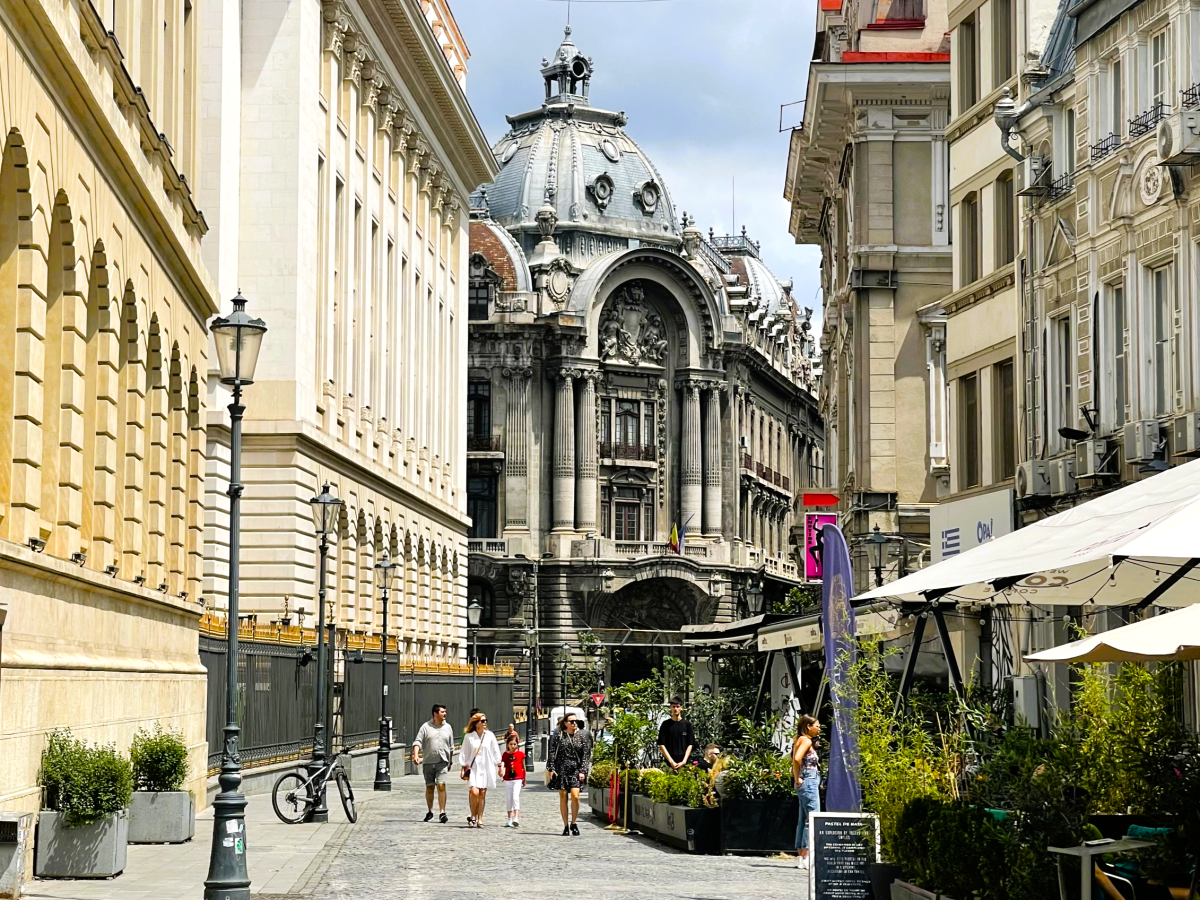
For travelers, discovering Romanian cuisine is more than just a dining experience—it’s a way to connect with the country’s identity. Expect generous portions, bold flavors, and a warm sense of hospitality that shows up in every meal. From savory dishes like sarmale (stuffed cabbage rolls) to sweet treats like papanasi, Romania offers a delicious variety of must-try foods that reflect both its rustic charm and its vibrant culinary heritage.
Don’t forget to try Romanian wine or Tuica, a traditional Romanian brandy, both fitting beverages to accompany your menu choices.
We’re here to help you get ready for a wonderful foodie experience, so this is our menu round-up of traditional Romanian foods that we think you’ll want to try.
Soups
Soups are popular in Romania, both as a starter and a stand alone meal. Stopping off for a lunch of a hearty soup and bread is both filling and inexpensive
Tripe Soup (ciorba de burta)
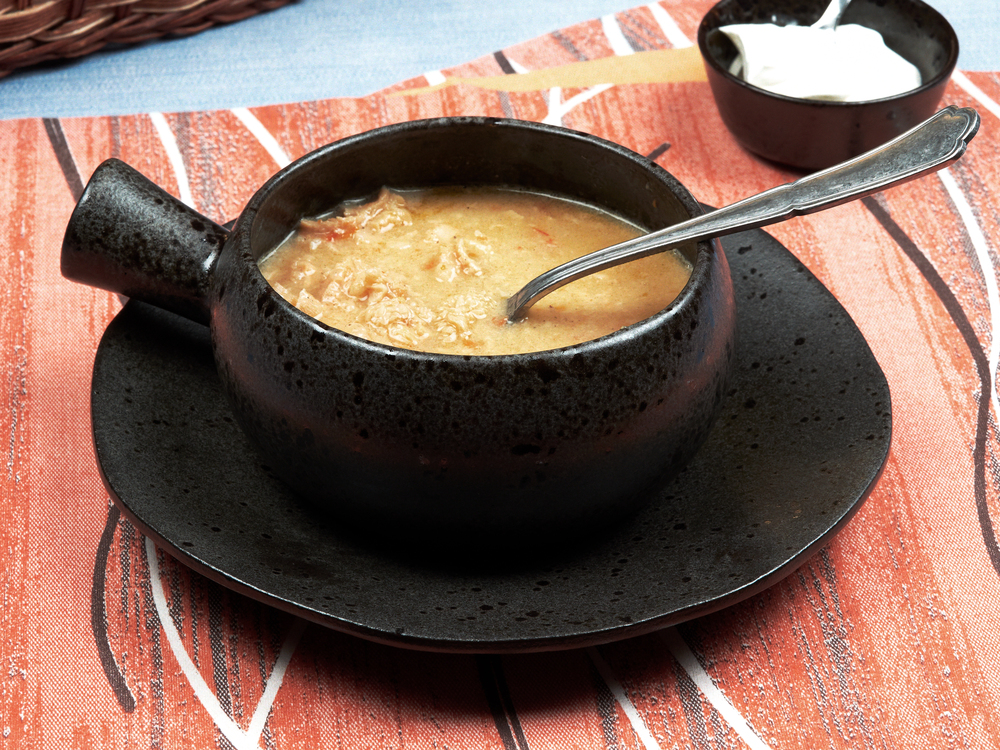
Tripe soup is one of Romania’s most popular traditional dishes, and usually the most popular soup on a restaurant’s menu. The starring ingredient is tripe, or, cow belly. To be honest, I haven’t gotten past the visual on this, so I have not tried it, but I’d be remiss no to include this beloved soup on the list.
Transylvanian Pork Soup (ciorba ardeleneasca de porc)
Ardeal is the region of Transylvania in Romanian. When you see the word Ardeleneasc‘ on a menu, it simply means Transylvanian. This is a traditional Transylvanian pork soup. Enjoy with slices of warm bread and pickled hot peppers.
Potato Soup with Smoked Meat (ciorba de cartofi cu ciolan afumat)
Any soup with ciolan afumat (smoked meat)is popular in Romania, and this potato soup is commonly seen on local menus. The red onion salad that accompanies it is also very traditional, and can be enjoyed as a separate salad. I’ve recreated my own version of the salad at home and serve it often.
Meatball Soup (ciorba de perisoare)
Meatball soup is another of Romania’s famous soups, and is a staple on restaurant menus and for cooking at home. The meatballs are made with a made of ground pork (most commonly) or beef, then mixed with rice and spices. It’s then soured up with lemon juice, creating a hot sour soup. This was a favorite soup of mine.
Radauteana Soup (ciorba radauteana )
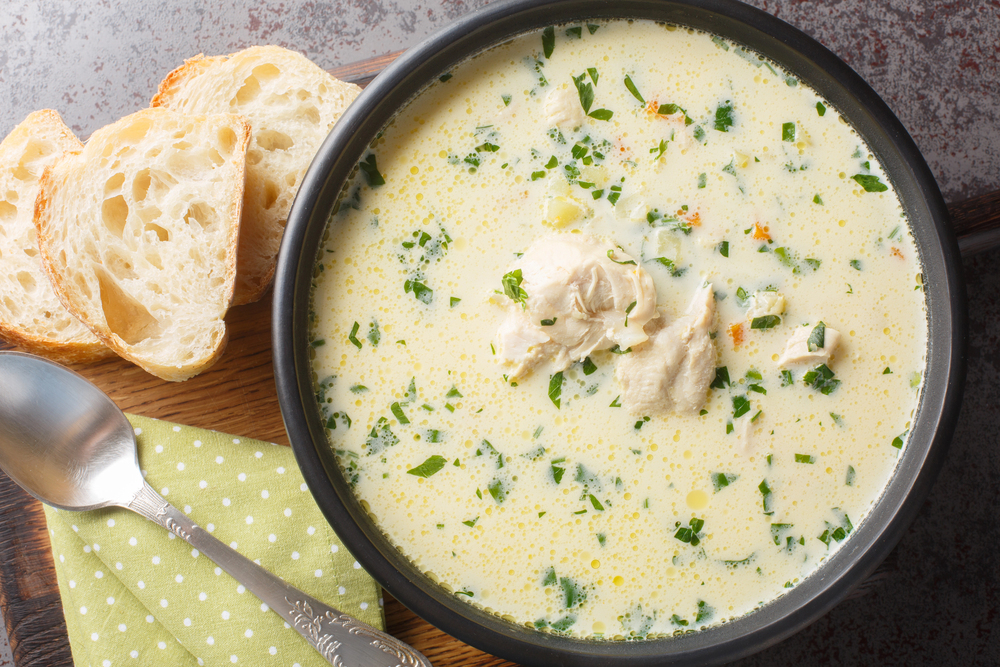
First introduced in 1979 by chef Cornelia Dumitrescu, this soup is alternative for those who aren’t fond of tripe soup. Turkey was substituted for tripe, although chicken is usually the substitute these days, create a lighter, but very tasty, soup. This is a version I was willing to try.
Stuffed pepper Soup (ciorba de ardei umpluti)
Stuffed pepper soup isn’t often found in restaurants as it’s hard to make in quantities to feed a number of patrons. It’s often made at home, especially delicious on a winter night. If you see in on a menu, give it a try, as you’ll likely not try it otherwise.
Snacks & Appetizers
Pickles (muraturi)
I love pickles. All sorts. So I was already inclined to find Romanian pickles a delightful accompaniment to a meal. Now, as any Romanian grandma will tell you, the best ones are made at home. Still, I found plenty of crunchy ones as garnish on plates or as small assorted pickle salads.
Eggplant Dip (zacusca)
This is a great option for vegetarians, or to serve as a simple summer appetizer. Its main ingredients are eggplant, onions, tomato paste, spices, and paprika peppers (those peppers used to make paprika). This is another dish that is easy to make at home; I use ground paprika, and for a little extra flavor opt for a smoked variety.
Eggplant Salad (salata de vinete)
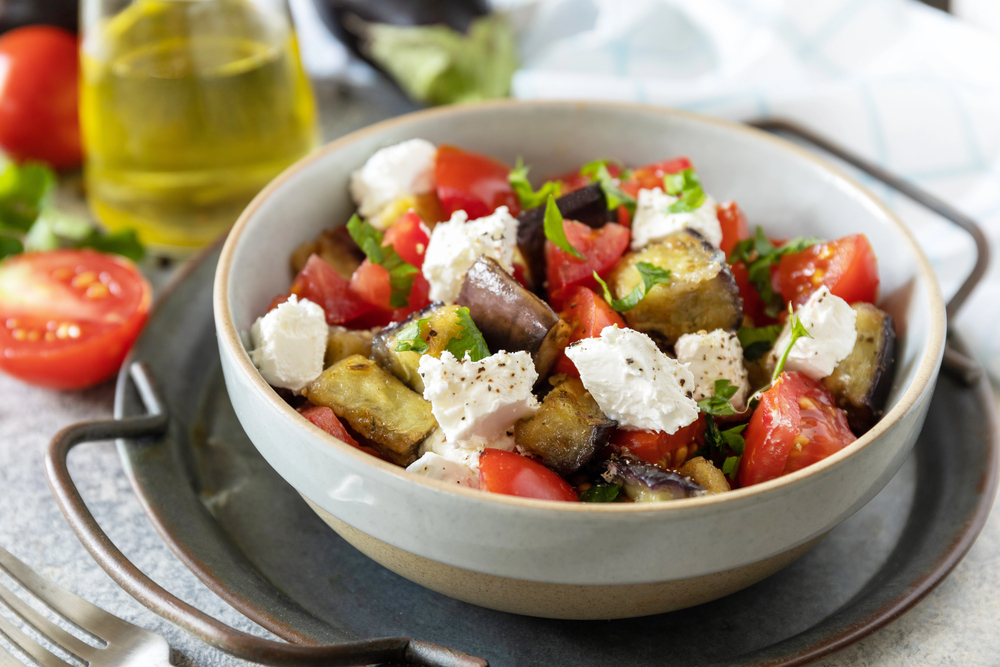
This traditional Romanian salad is delicious in warm weather. It’s refreshing, and when served on top of fresh bread, with tomatoes, and feta cheese makes for a great lunch. Traditionally the salad is made with sunflower oil, diced onions, salt and lemon juice (originally vinegar was used as lemons weren’t popular).
Bread with Lard and Onion (pita cu unsoare si ceapa )
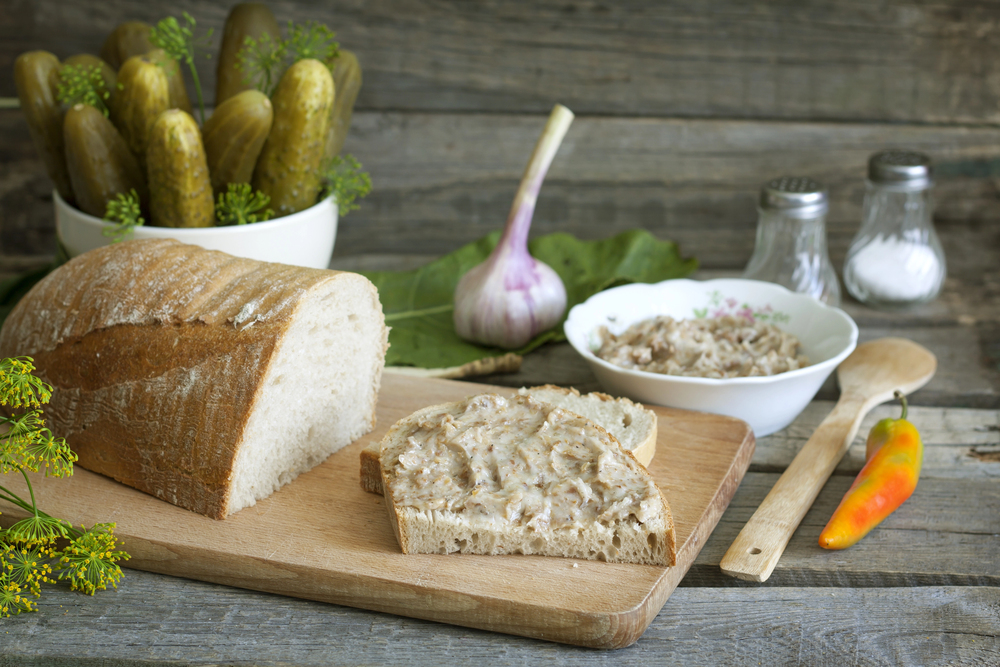
This dish is a common appetizer on Transylvanian menus and one of the most old-school traditional Romanian foods. It’s simple, too – bread smeared with pork fat, with a sprinkle of chopped green onions. The richness of the bread and lard pairs quite nicely with the crispy, sharp bite of the onions. You’ll find variations of this comforting peasant food in countries in Central and Eastern Europe.
Covrigi
Covrigi are Romanian baked goods that are similar to a pretzel or bagel. They come with a variety of toppings, and are easy to find at a walk-up window or bakery. You’ll find storefronts selling them on most tourist streets in the major cities.
Slanina
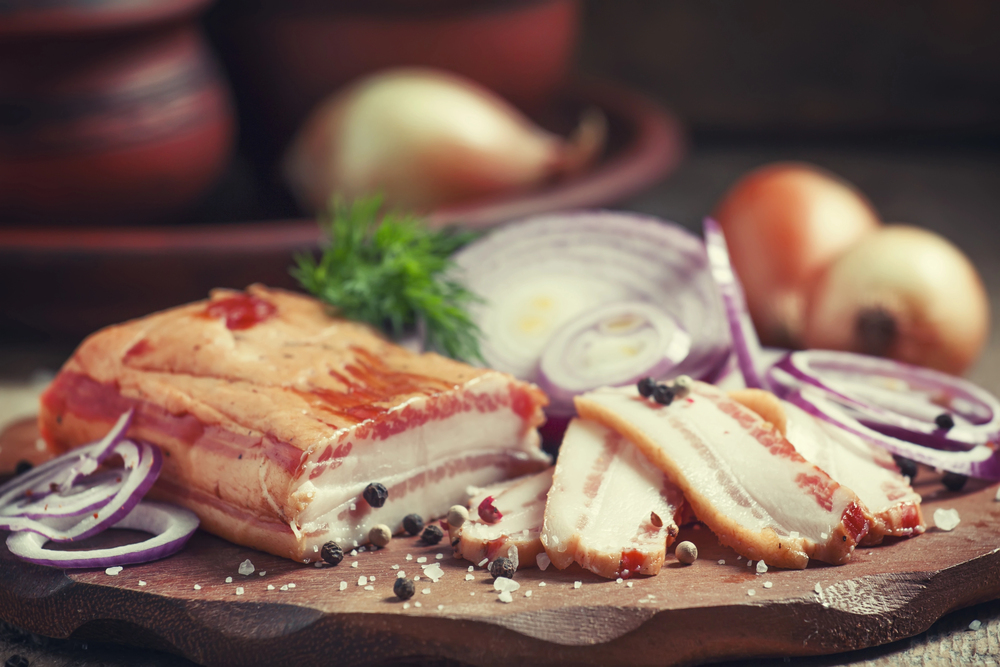
Slanina is essentially a cured slab of fatback. It is most similar to Italian lardo, aside from the thickness. Slanina is very thick, lardo is cut super-thin to pair with charcuterie.
The best way to try Slania is little batonnets served alongside freshly chopped (and salted) veggies, and torn pieces of crusty bread. You’ll find it on appetizer platters with cured meats, local cheeses, and fresh produce.
Main Dishes
Sarmale
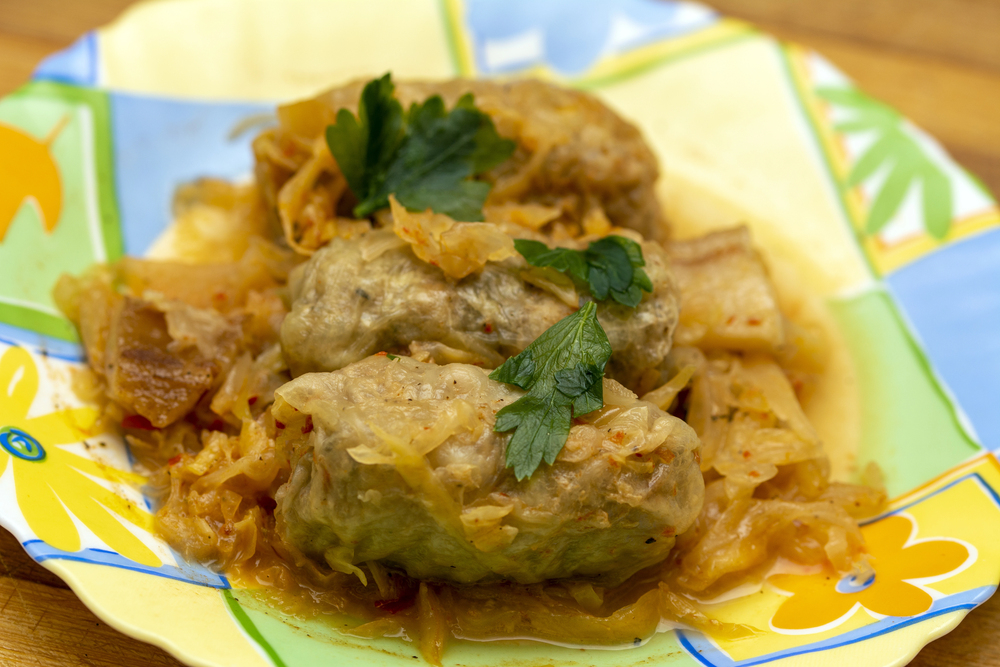
Sarmale seems like the unofficial “official dish” of Romania. You’ll see it on most every restaurant that serves traditional Romanian food.
Essentially, sarmale is stuffed cabbage rolls. The stuffing may vary, but is typically a ground pork and rice mixture. It’s served with polenta, cabbage, pickled hot pepper, and slice of pork, and is well-love Romanian comfort food.
Varza a la Cluj
Cabbage is a staple in Romanian cuisine, and the city of Cluj-Napoca has its very own special preparation. This version of the traditional Transylvanian dish is made using minced meat, onion, cabbage, and rice, then topped with a sour cream and milk mixture. The specific recipe will vary as each restaurant puts its own special touches to it.
Papricas de Pui (chicken paprikash)
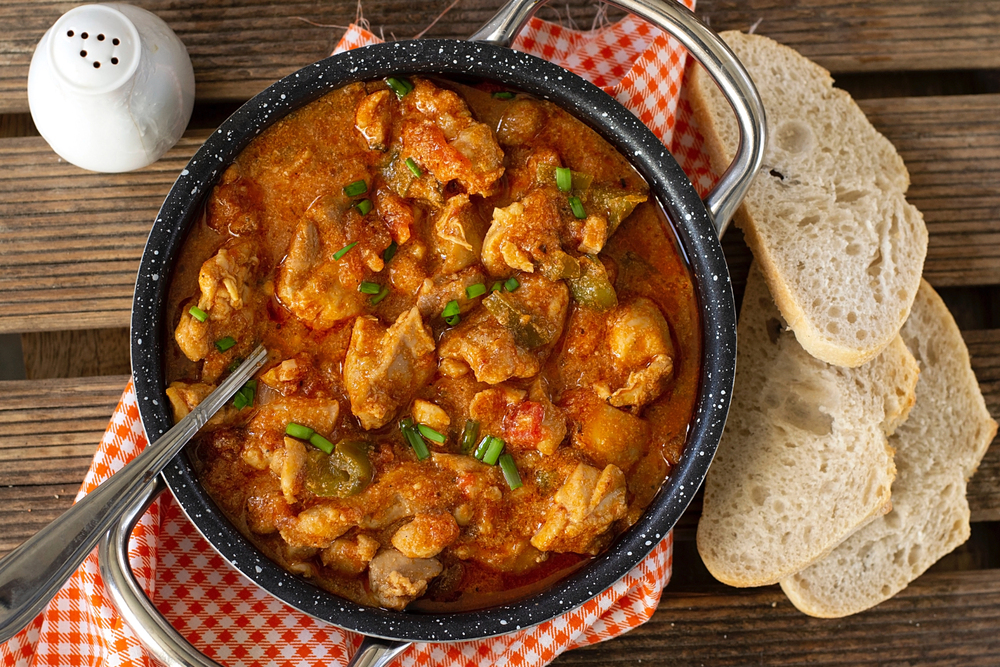
Although this dish is of Hungarian origin, it’s typical to see on Romanian menus. This is particularly true in the region of Transylvania, where there is a large Hungarian population.
This is another dish that I loved – tender chicken simmered with vegetables, broth, and paprika with sour cream gradually folded in throughout the cooking process. Creamy, spicy, all sorts of deliciousness. I keep saying I’ll tackle it at home, but so far haven’t done so. Perhaps having it Romania will make my at-home version pale in comparison.
Tocanita
Tocanita translates to stew in Romanian, and is another common comfort food dish. It’s typically made with chicken or pork, but on occasion, you’ll see other meats used (lamb).
A common variation to the recipe is the addition of mushrooms. So basically, chicken and mushroom stew. A great option for a cold or rainy day.
Mititei
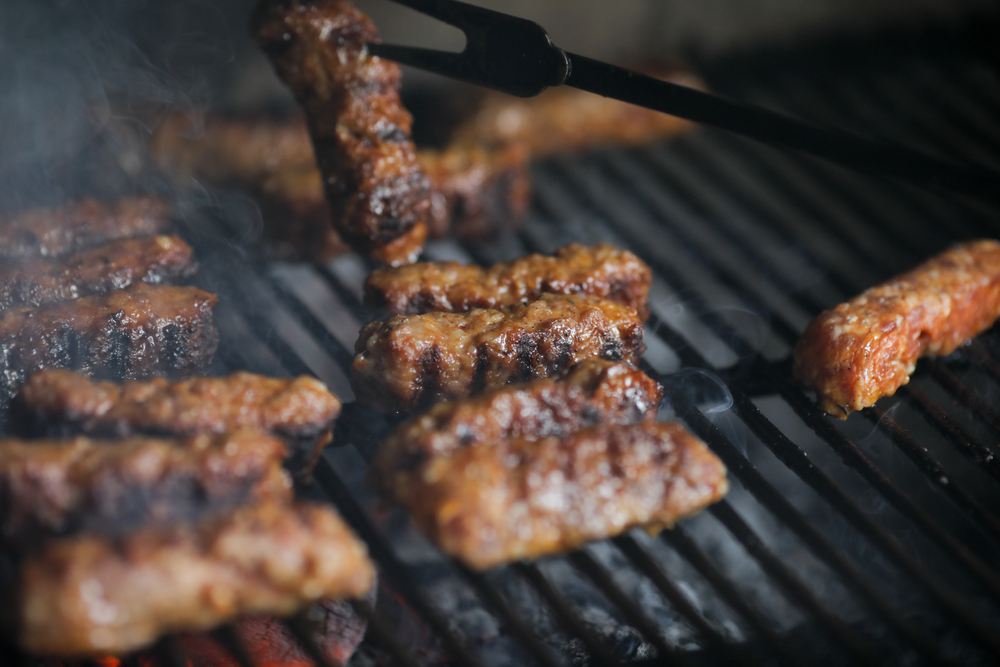
Affectionately known as littles, you’ll find these everywhere, and usually sold in portions of three. They are tiny, grilled, ground meat rolls, usually a combination of different types of meat. It’s essentially a little sausage without casing.
Romanians love to have barbecues, a littles are synonymous with outdoor grilling. Definitely one of the top traditional Romanian foods to try.
Coaste de Porc (pork ribs)
Pork is probably the most popular meat consumed in Romania. So, of course, menus all over the country have pork ribs. Different restaurants and families will prepare them differently, similar to ribs you’d eat elsewhere around the world. Who doesn’t love a good rack of ribs?
Mamaliga (polenta)
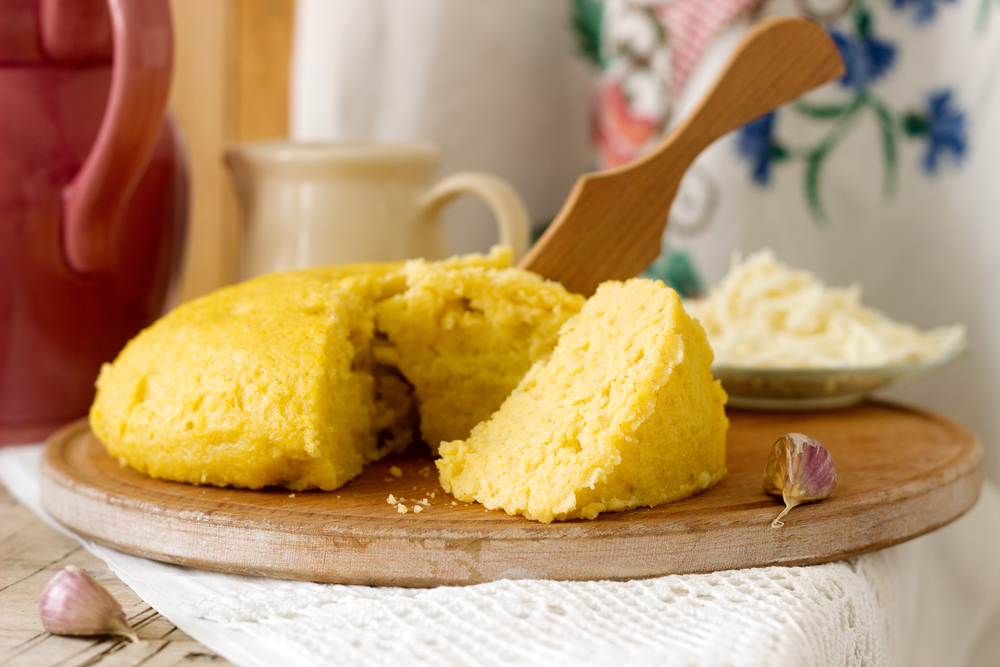
Mamaliga is the Romanian word for polenta, a cheap and easy dish found worldwide. It’s a common side dish in Romania, accompanying tocanita, sarmale, and other dishes.
Bulz
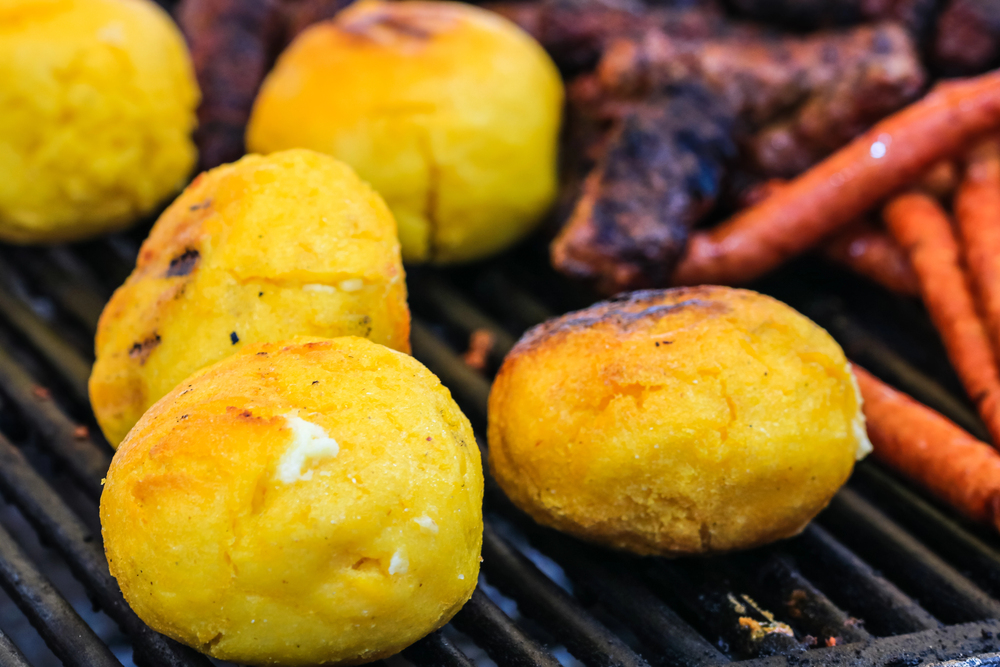
Bulz is roasted polenta with cheese, sometimes with sour cream or an egg. It’s super-rich, not terribly healthy, and three bites may fill you up. Still, it elevates polenta to a main dish (popular for vegetarians), or order it for the table to share.
Tochitura Taraneasca
This traditional Romanian pork stew is simmered over low heat in its own fat and juices. When made at home, it’s most often prepared and served in a cast-iron pot. It’s traditionally served with over-easy eggs and mamaliga.
Cascaval Pane (fried cheese)
Mention cheese, and I’m ready to try it! Cascaval pane is the Romanian version of a mozzarella stick. Breaded and fried, it’s usually cut into wedges and served alongside fries or polenta.
Gulas (goulash)
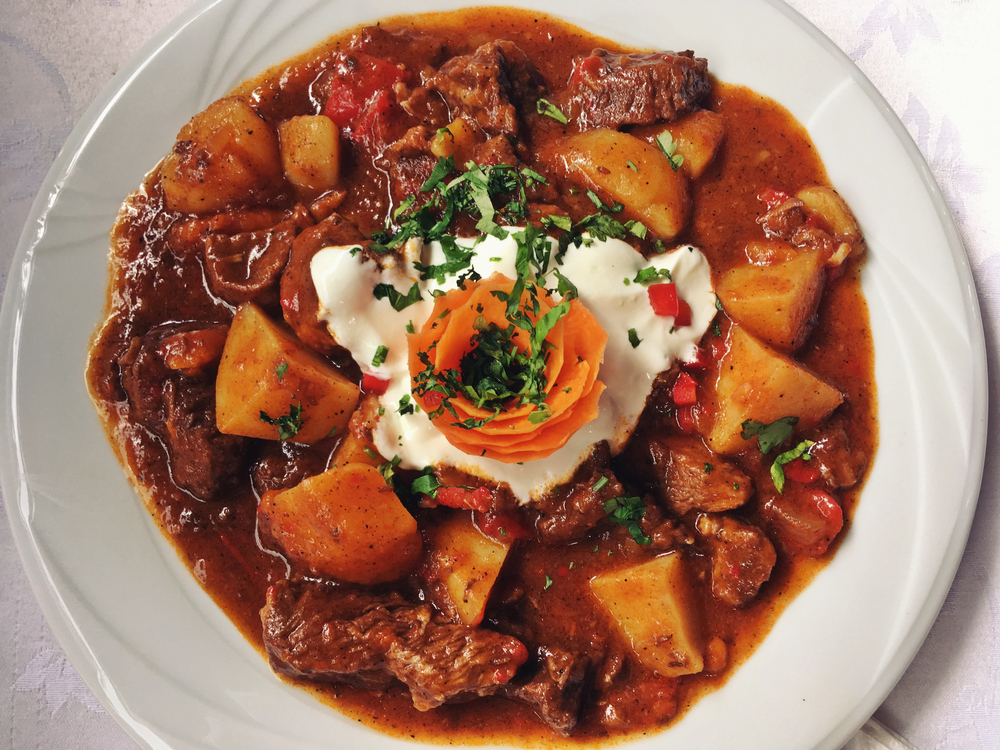
Another dish Hungarian in origin, but one that you will find on virtually every traditional Romanian restaurant’s menu. A hearty meat and vegetable soup-style main dish, it is seasoned with paprika and other spices (dependent upon the region). This was another dish I found delicious and ate often.
The name of the dish translates to herdsman, and dates back to the 9th century when Hungarian shepherds would dry meat in the sun, pack into bags made of sheep’s stomach, and then add water to make it a meal. The earliest versions did not contain paprika, that spice was introduced to the region until the 16th century.
This was another of my favorites. I ordered it often, and everywhere I had it was just a bit different.
Desserts
I love desserts, although only usually wanting a couple of bites, and I’ve been known to plan my menu order working backwards from a dessert choice. Romania had a desserts that ticked off all the flavors – sweet, sour, rich, and delicate. There’s a vast array to choose from, giving you plenty of choices during your time traveling in Romania. My recommendation is to order a couple for the table and share; that way you get to taste more.
Prajitura cu Mere (apple cake)
This apple cake works well as a dessert, but bonus points – it’s also great for breakfast. Sweet, sliced apples are soaked in cinnamon, sugar, a bit of butter, and water until they’re soft. The apple mixture is then baked between flaky, delicate layers of pastry crust until golden brown.
You can always find this in local bakeries or markets. It’s also a fairly easy dish to make, so if you enjoy it, you can find a recipe to make it at home (on my to-make list).
Savarina Cake
This cake is very common in Romanian bakeries. The cake is soaked in rum overnight, piped full of whipping cream and finished with tart fruit jams or preserves to impart a semi sour taste. The signature look is the swirl of whipped cream on top with a sour cherry.
Cornulete
These delicate little cookies are a beloved favorite among Romanians and visitors to Romania. Rich, buttery cookie dough is twisted around different fillings such as poppy seeds, hazelnuts, or plums. These crumbly little cookies are like a combination of shortbread, scone, and croissant, with the dough is twisted in the shape of croissant after the filling is added.
Finished off with a dusting of powdered sugar, be sure to grab a napkin. Or two. You’ll be tempted to just lick your fingers; they are that good.
Vargabeles
This dessert is Hungarian in origin, but you can find it in abundance throughout Transylvania and other places with a large population of ethnic Hungarians. It owes it roots to Cluj-Napoca, so you’ll find it on most menus in that part of the country.
The consistency is similar to rice pudding, only it’s made with Hungarian sweet noodles. It’s like a noodle pie, with egg noodles, egg whites, sweet cheese, and milk, all between fluffy pastry layers. Occasionally raisins, lemon zest, whipped cream, or cinnamon are added.
Placinta (pie)
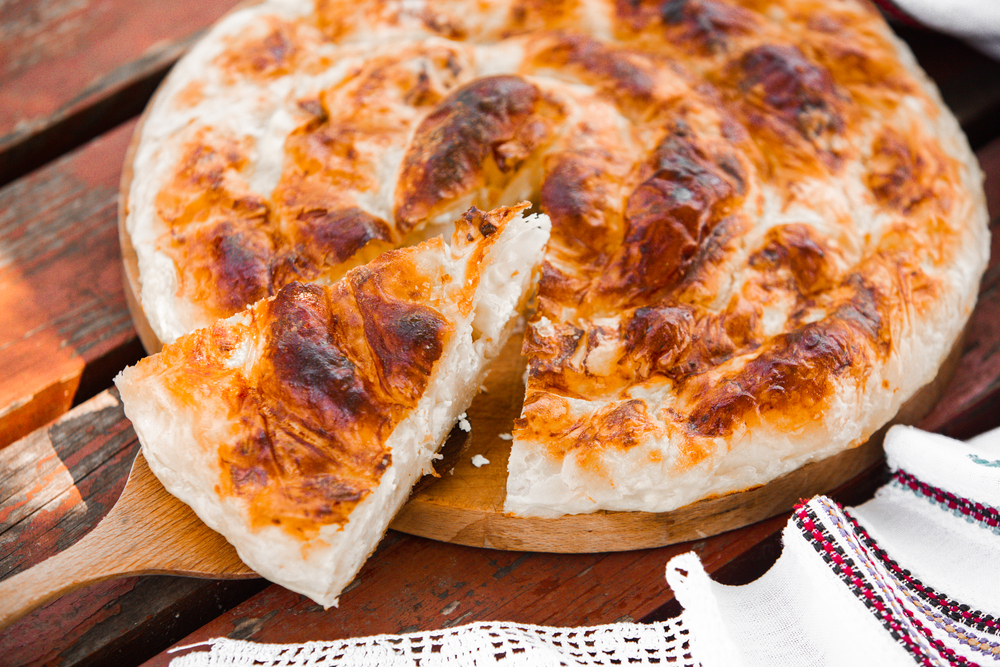
You’ll find a lot of variations of Romanian pie. Common variations include chocolate, apricot (caise), apple (mere), and branza (cheese).
Don’t overlook some of the fillings that aren’t consider typical pie fillings. You’ll find some made as a layer cake, sponge cake, and with cream fillings.
Papanasi
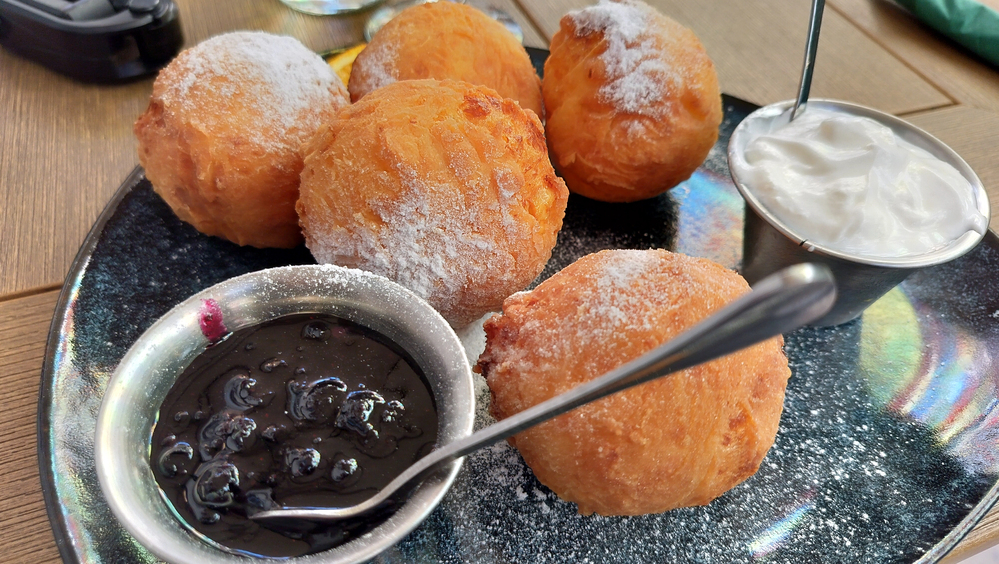
Papanași are undoubtedly the most famous desserts in Romania. Tourists and locals alike swoon over these sumptuous little sweet cheese donuts. They come in varying sizes, from the size of a golf ball to the size of a fist.
You can make papanași either fried or boiled – guess which is better! Obviously the fried ones are the beloved favorites. The boiled donuts are usually coated in a wet breadcrumb and sugar mixture.
If you visit a restaurant in all of Romania that offers dessert, you can be all but guaranteed to see these on the menu. They are best served warm with a fruit or sour plum compote and a dollop of sour cream, finished with a dusting of powdered sugar.
Joffre Cake
In the 1920s, a French Marshal visited an elite cafe in Bucharest. When the owners learned he would visit, they wanted to make a special cake in his honor, and thus was born the Joffre Cake.
The cake is special because it’s shaped after the traditional helmets that the French army wore during the time, and is a rich chocolatey dessert.
Made with alternating layers of chocolate buttercream and rich chocolate ganache, this is the epitome of decadent. Finished with a layer of buttercream chocolate frosting and cocoa powder, you’ll be licking your fingers after this one.
Kurtoskalacs
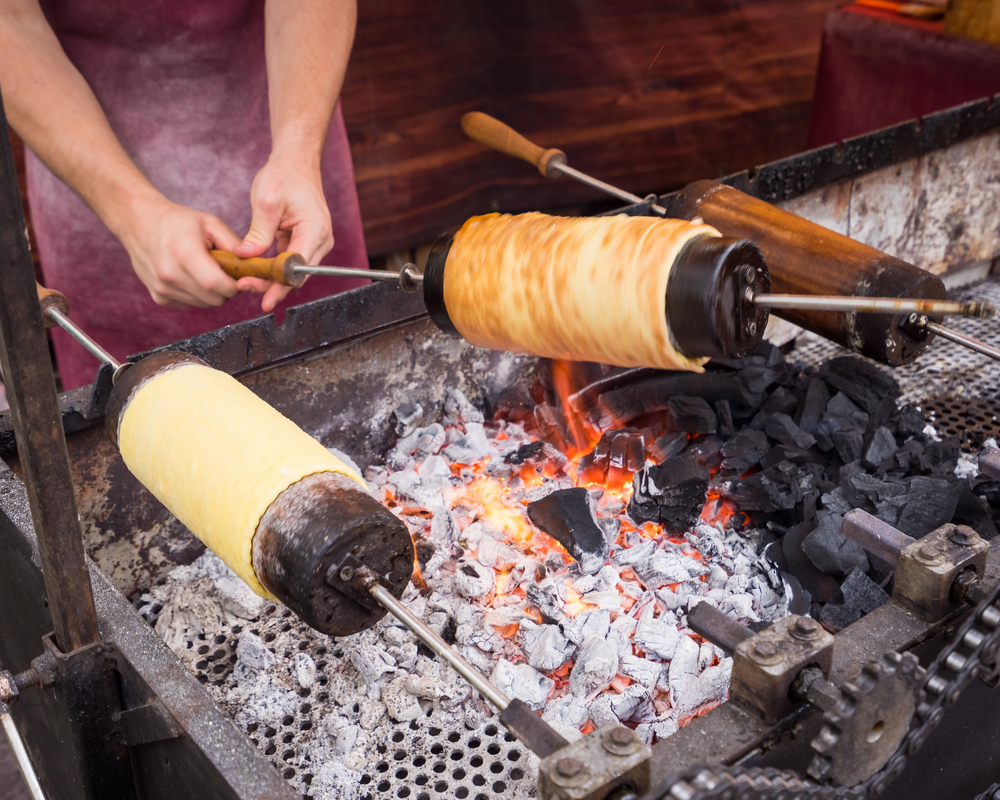
Another dessert that is Hungarian in origin, kurtoskalacs are sometimes referred to as chimney cakes because of the shape they take after they are made. More of a street food than a sit-down dessert, these spit-roasted cakes are often found at a food truck or walk-up window.
The baker spins a flat piece of sweet dough around the spit and coats it in sugar or sugar-cinnamon mixture before roasting it until it’s a gorgeous, golden brown. The best places to get chimney cakes will consistently baste the dessert with butter while it’s roasting. The outside is perfectly crispy and warm, while the inside remains its fluffy, light doughy texture, and are often topped with ground walnuts, crushed biscuits, powdered sugar, shredded coconut, cinnamon sugar, or cocoa powder.
These are best eaten hot and fresh, so try to get one right off the fire.
Placinta cu urda
Romanians love to use sweet urda cheese in their desserts. Somewhat reminiscent of cottage cheese, it combines with granulated sugar, vanilla extract, and eggs combine to make a light sweet cheese pie.
Because of its simple preparation, it’s easy to get creative with additional ingredients for this pie. Orange zest, vanilla sugar, rum syrup, and grated apples are common variations.
Clatite
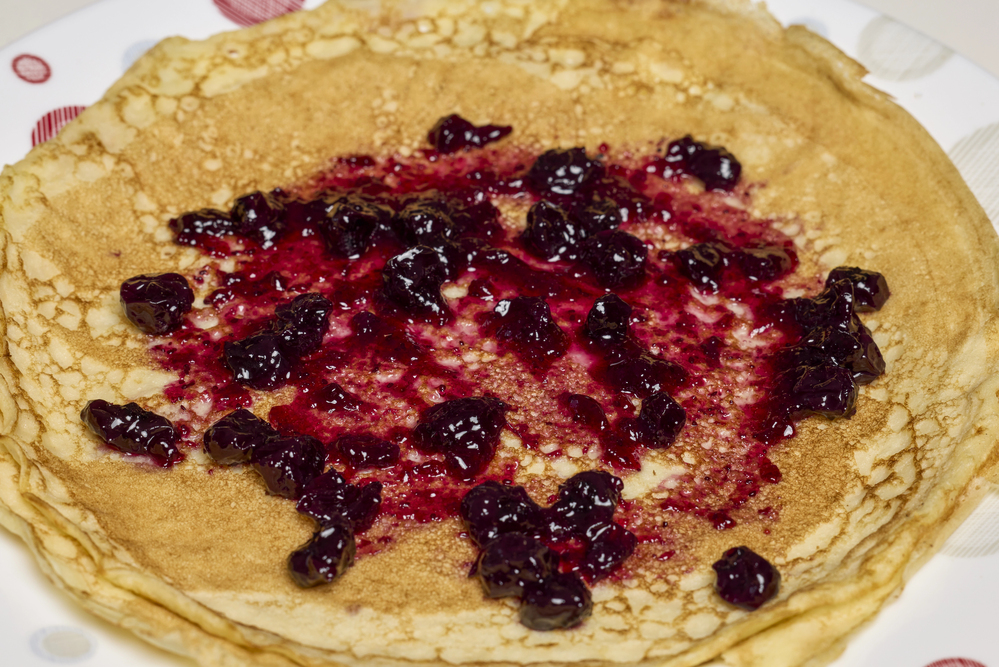
Clatite are a close runner-up for most popular dessert in Romania. They are most similar to French crepes and come in dozens of filling options.
Using a griddle, a thin layer of batter is lightly cooked and then wrapped like a cone, then filling and toppings are added. You’ll find more fillings offered at food carts and walk-up windows, while restaurants stick mostly to plum preserve, sour cherry, or chocolate.
Albinita
One of the most common Romanian layer cakes, the name translates to “little bee”. It is a delicious Romanian honey cake made with many layers of sweet cream, honey, vanilla extract, lemon cream, and apricot jam.
Branzoaica
Another sweet cheese dessert, Branzoaica are from Moldavia, one of the three regions of Romania. They are traditionally prepared with vanilla extract and raisins alongside sweet cheese folded into a flaky square of puff pastry.
The secret to this dessert is the special technique used to fold the dough. The trick in folding the filo pastry is folding the corners over themselves in a way that the filling doesn’t seep out of the cracks. You may need to find a bunica (grandmother) to teach you in order to get it right; the art of the dough is passed down within families.
Mucenici
This delicious dessert is made from a sweet dough shaped in a figure eight. After the shapes are made, the dough is left to cook in boiled water with heaps of spices and crushed walnuts, making an incredibly unique and flavorful treat.
These translate to “little martyrs” in English, and are named as a tribute to the Forty Martyrs of Sebaste, a group of Christian-Roman soldiers. During the persecutions of Diocletian, the Forty Martyrs refused to stray from their faith and were killed by drowning.
It’s a little macabre, but the boiling water symbolizes the water the Martyrs drowned in. This dessert is as common as others, but you should be able to find some on 9 March, the date of the Forty Martyrs feast.
Friganele
Romanians tend to treat this dish as more of a breakfast than a dessert, but what’s not to like about dessert for breakfast.
Friganele is similar to a French Toast or a sweetened paine in ou. Slabs of sweet bread are drenched in a batter of eggs, powdered milk, and spices with a bit of plum jam and powdered sugar.
Try some simple variations. The traditional Romanian version is a little bland, as our many of the traditional desserts, a result linked to the country’s history of poverty and food shortages.
Galuste cu prune
Galuste cu prune are a simple boiled version of papanasi, except the filling is with plums instead of sweet cheese. These boiled dumplings are similar to gnocchi and usually smaller than papanasi. They are coated in a wet breadcrumb mixture made of cinnamon, sugar, and a little vegetable oil as a binding agent. Ground walnuts are also occasionally used.
This is another Romanian dessert that can be spruced up a bit with additional ingredients. Try a drizzle of icing sugar or yellow glaze over your galuste.
Gogosi
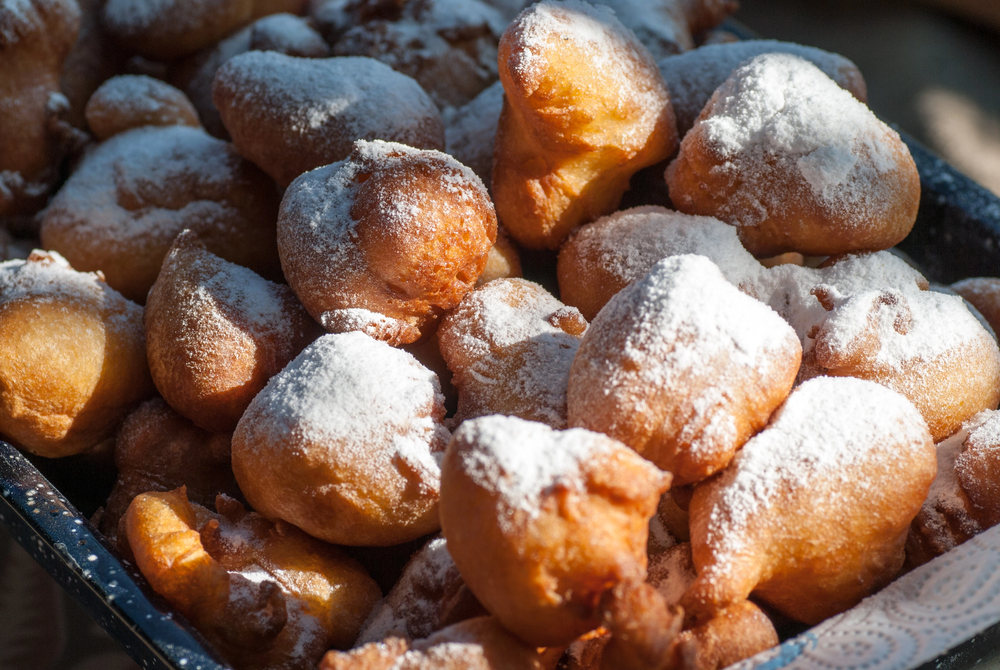
While galuste cu prune are like the boiled version of papanasi, gogoși are the fried version. The dough is scented with citrus zest and prepared without butter or yeast. The maker adds the dough to the oil by the spoonful, resulting in some unusual shapes that are nowhere near uniform.
Sometimes you can find them with a creamy filling, sometimes plain with a little powdered sugar on the top. These traditional desserts can be found in local bakeries or supermarkets.
Carpati
Carpati is a traditional Romanian dessert that is inspired in the shape of the Carpathian Mountains, and is mostly found within that region. It has eight layers of sponge cake and chocolate cream.
You won’t often see this dessert in a restaurant, but if you do, make sure to order it. The best option to try carpati is if you’re fortunate enough to be invited to someone’s home. Or, if you can arrange a homestay.
Holiday Favorites
Pasca
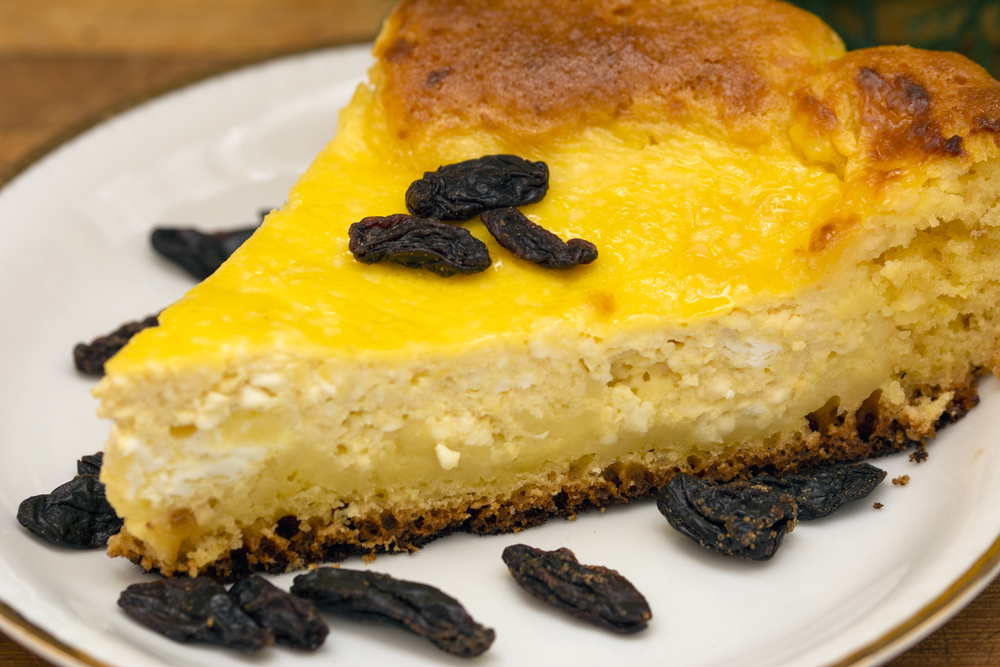
Pasca is a traditional Romanian dessert served around Easter time. Though it uses simple ingredients, similar to the main ingredients used in other Romanian desserts), it’s braided into a beautiful circular shape that sets it apart from the rest.
Using sweet cottage cheese, a bit of sour cream, rum-soaked raisins, an aromatic mixture of spices and sweet cake, this is a subtle and lightly sweetened dessert.
Cozonac
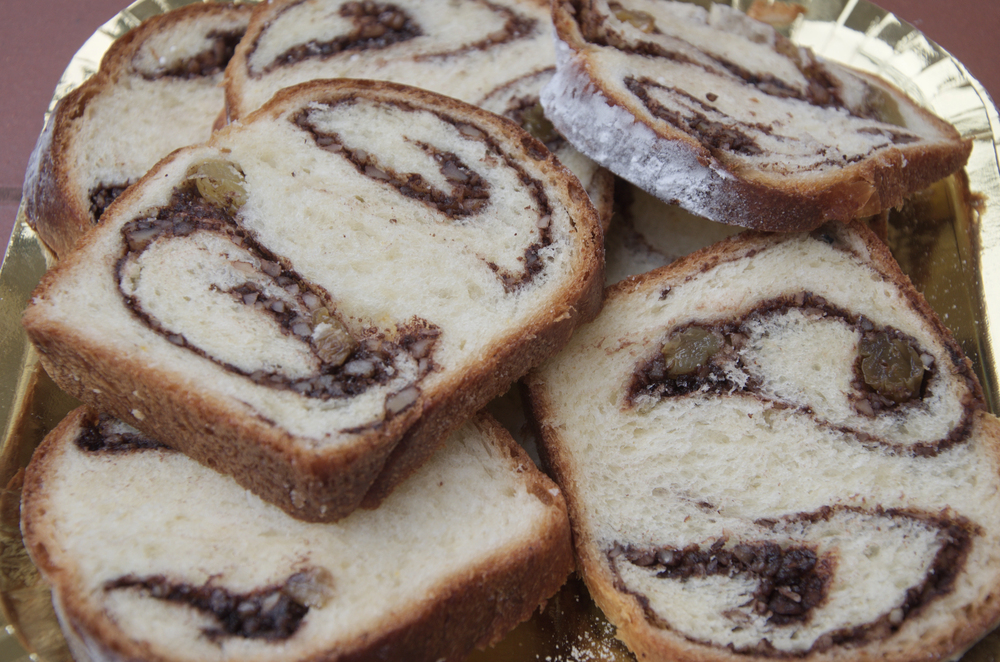
Cozonac is a traditional Balkan dessert found in Romania. It’s a common addition to the table during Christmas dinner, but you can occasionally see it other times throughout the year. You can eat it warm or served cold with whipping cream.
Made of a brioche-like sweet bread, you’ll find the mouth-watering flavors of melted butter permeate the fluffy marbled cake. As with other Romanian desserts, many times it is made with variants such as orange peel, vanilla extract, lemon zest, crushed walnuts, Turkish delight, coconut flakes, or raisins.
Drob
Drob is a traditional Romanian food served at Easter. It’s essentially a meatloaf consisting of lamb organs (liver, kidneys, spleen, lungs, heart), eggs, green onion, and soaked bread. Some spices are incorporated, and then the membrane that contains the lamb’s organs gets placed over a pan and filled with the mixture.
This one did not get my palate watering.
Red eggs
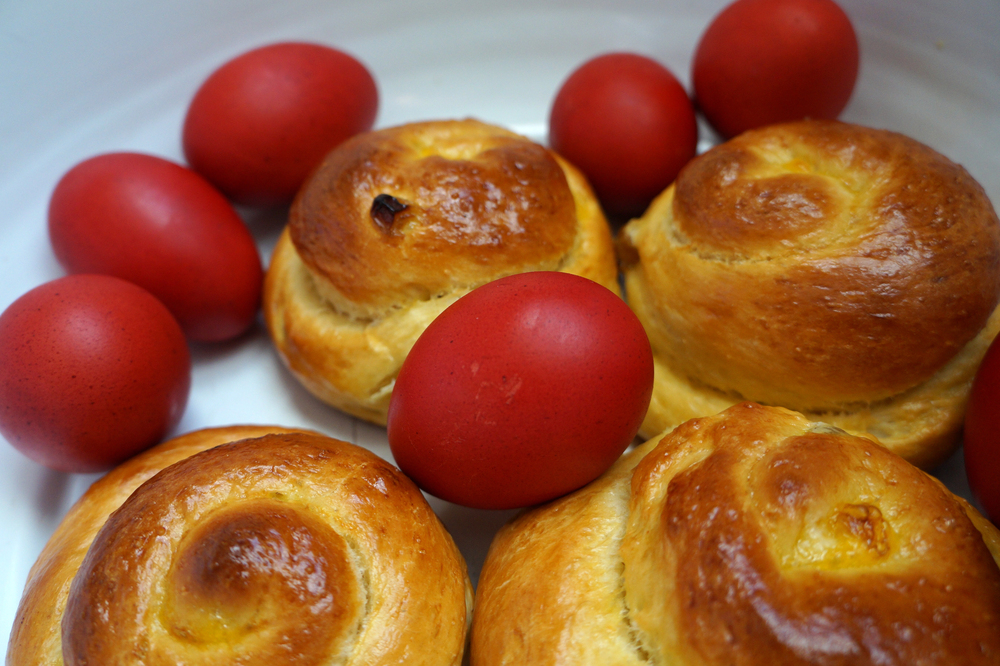
The red eggs of Orthodox Easter have many purposes during the holiday season. On the Thursday before Easter (Holy Thursday), people gather to boil and dye the eggs. They are traditionally dyed red to symbolize Jesus’ blood when he was crucified. In the smaller villages, the dye is made from natural agents such as red onion skin or beetroot.
Before eating the eggs, it is customary for two people to knock their eggs together. While knocking them together, one person says “Christ is risen” while the other replies with “Indeed is risen“. The person who cracks the other person’s egg wins. (I’ve not been clear what winning actually means, though.)
Then, of course, everyone eats the boiled eggs on Easter Sunday. And probably for the rest of the week.
Vegetarian /vegan food in Romania
Romania has a surprising amount of vegetarian and vegan food offerings at restaurants. If you’re unsure, or if you need to tell your server, use the phrase “de post.” That communicates your concern and your server can help you from there.
In the weeks before Easter you’ll have especially good luck, as virtually every restaurant offers vegan dishes for the period of fasting.
You will usually be able to find vegetarian or vegan pastas, pizzas, and salads easily. In terms of traditional Romanian foods, you’ll be safe with zacusca, salata de vinete, and mamaliga. Restaurants often offer vegetarian versions of sarmale, tocanita, and papricas. However, these may not be vegan friendly, so be sure to check with your server.